
This story is mostly sourced from ‘Texas Women in World War II’, by Cindy Weigand (2003), in which each chapter is about a different woman involved in the Second World War. It was first brought to my attention in ‘The History of Frenchay Hospital’ by James C Briggs.
Ruth Hamilton Prengle was born in Greenburg, Pennsylvania in 1920 and graduated from high school in 1937. From the age of five years old, Ruth dreamed of being a nurse and in 1940/41 she graduated from the University of Michigan with a degree in nursing. Ruth was back nursing in her home town and due to marry her husband, a U.S. Army reservist in December 1941. With tensions rising in the Pacific, he was called up for a year’s service so they hastily married on 6th December, the day before the Pearl Harbour attack.
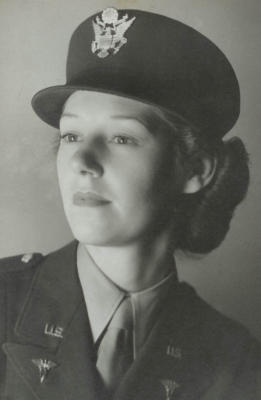
American duly declared war on Japan and Ruth was keen to enlist in the Army Nurse Corps. However, at the time their policy was not to accept married nurses, something she described as ‘foolish!’. In late 1943, the policy changed and by January 1944 Ruth had enlisted and reported for duty. Initially, her husband, Bill, didn’t approve but realised she would want to do her part for the war effort.
After six weeks basic training at Fort Mead, Maryland where she learned how to be an army nurse and a soldier, Ruth could choose her assignment. With Bill in England, she joined the 193rd General Hospital as that’s where they were headed. Leaving in late February, their nine day voyage over the Atlantic ended in Greenock, Scotland where they boarded a train heading south. “Nobody ever told you anything, you just did as you were told,” Ruth explained. Their journey took them to Colwyn Bay, North Wales, back to England and then to Northern Ireland for six weeks.
Ruth transferred to the 117th General Hospital, which was stationed at Frenchay Park. She worked in the plastic surgery ward with Dr Clifford Kiehn who also trained at the University of Michigan. As a First Lieutenant she was in charge of the ward.
“Bristol was a seaport town, so hospital ships could come in. We could put patients on them to be sent back to the United States.” Initially, these would have been from the fighting in Italy but later, following D-Day, from France.
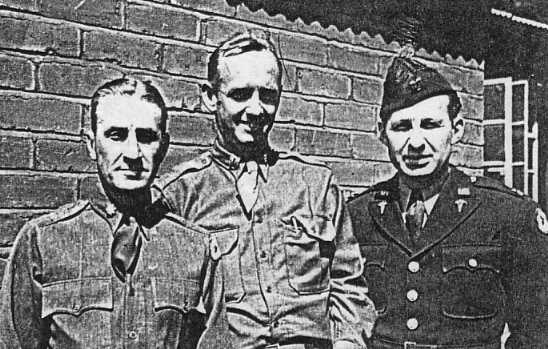
“A few were on the ward when I arrived. The war got more intense. One night, I received fourteen patients in one fell swoop. We worked the rest of the night, then all the next day getting them situated and removing their dressings to determine the extent of their injuries It was a real learning process as we went along. To remove the dressings (from burns), the patients had to bathe to soak the dressings off. With only three tubs for this part of the process, removing the bandages from all the patients took days.”
“We were working fourteen-hour days. That was about all you could put up with without taking a break.” The nurses were over-stretched, but after an inspection by the colonel, Ruth was allocated additional nurses to get the situation under control. “I don’t know where they came from or where they went, I was just glad to see them.”
“Sometimes following surgery these patients had to have casts to stay immobile for three weeks. It was pretty hard for those guys, because it was really uncomfortable. We had some excellent results, though. We were able to save arms and legs that would have been amputated in World War 1 because this procedure didn’t exist. It was a real thrill to see a badly damaged leg or arm covered with pink flesh. I only lost three patients during my (eighteen month) tour of duty.”
Ruth remembered one particular patient as he was a local boy named Robert Day. Robert had been struck by an American Army truck in Bristol and the civilian doctors had considered amputating his severely injured leg. Dr Kiehn determined that his leg could be saved and arranged surgery.
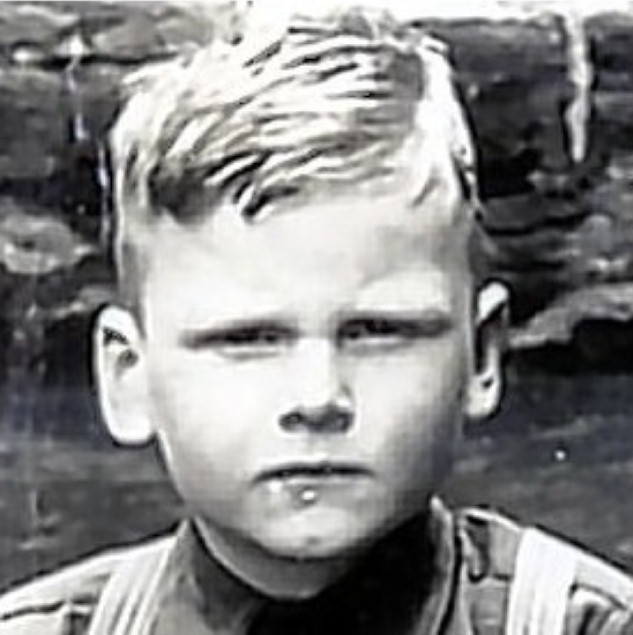
After his successful surgery, Ruth put him in a private room next to her office so she could keep an eye on him. Affectionately, they called him ‘Little Robbie’. “The ambulatory patients on the ward would stop in and visit with him. I got some children’s books from somewhere. The soldiers read to him and gave him gum and stuff like that, spoiling him rotten.”
Following another round of surgery, Little Robbie was discharged from hospital. “I never did hear how he fared after that. I arranged for Dr Kiehn to see him one more time but I didn’t get to see him at that time.”
Ruth remained in Frenchay until July 1945 when they were sent home for one month’s R&R before deployment to Japan. However, when mid-Atlantic they received the news of the first then the second atomic bombs had been dropped on Japan. By VJ Day and the end of hostilities, Ruth was in Times Square: “I wasn’t the nurse that got kissed though!”
Several days of confusion and discomfort followed as they were ordered to Fort Dix and onto Alabama then Georgia. Finally, Ruth was given her discharge papers and returned to civilian life where, amongst many other things, she volunteered to administer polio vaccine shots to her neighbourhood. She and Bill moved to the Houston area where they had two children. After retiring to San Antonio, Bill died in 2005 and Ruth in 2007.
Postscript
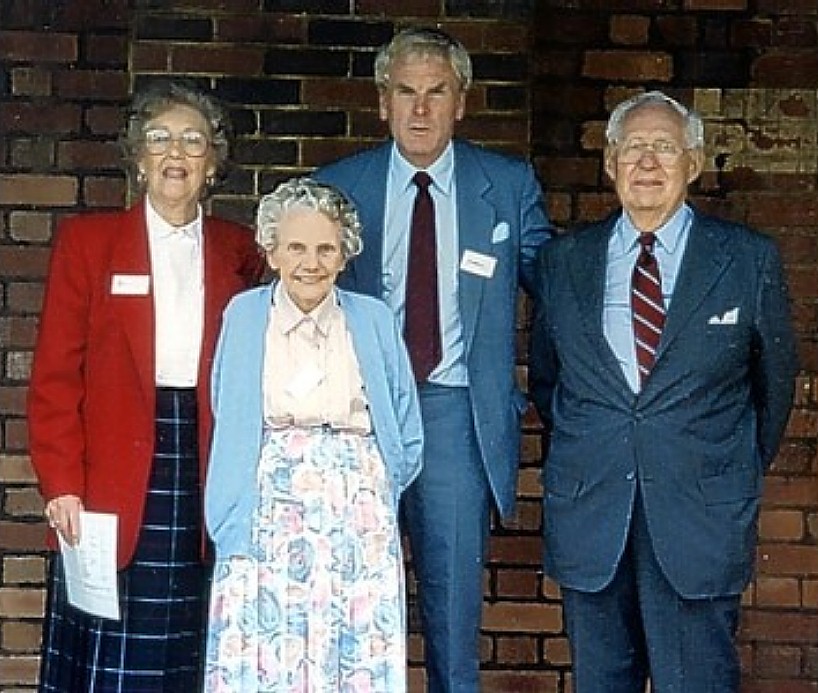
One day in 1992, Ruth received a letter which started “I don’t know if you remember me or not, but…”. Ruth knew immediately that it was from Little Robbie. Later that year, she attended a reunion in England and was able to meet up with Robert Day and his mother. “He had one little spot on his leg that didn’t heal well, but he played soccer growing up”. They remained in touch for the rest of Ruth’s life.
Sources
‘Texas Women in World War II’, by Cindy Weigand (2003)
The History of Frenchay Hospital, James C. Briggs (1994)
Winterbourne Family History Online
Obituaries on Porter Louring and Chron websites
We’d love to hear your own stories. Please get in touch with us by emailing YanksinBristol@gmail.com
Copyright © 2026 – YanksInBristol.co.uk – No AI – All rights reserved.
 US Military in WW2 Bristol