
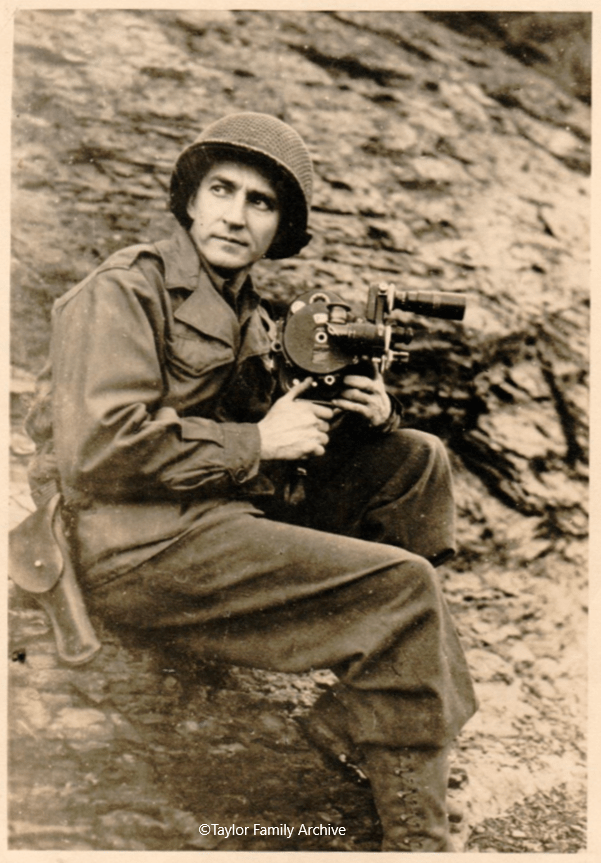
Taking his middle names from the first US president, Richard Albert George Washington Taylor was born on 22nd February 1907 in Des Moines, Iowa. When he and his sister were still very young, his family moved to the Tampa Bay area of Florida.
As an adult, Richard moved to New York where he worked at the Vandamm Studios taking headshots of actors appearing on stage. This included American actress, comedian, producer, and studio executive Lucille Ball.
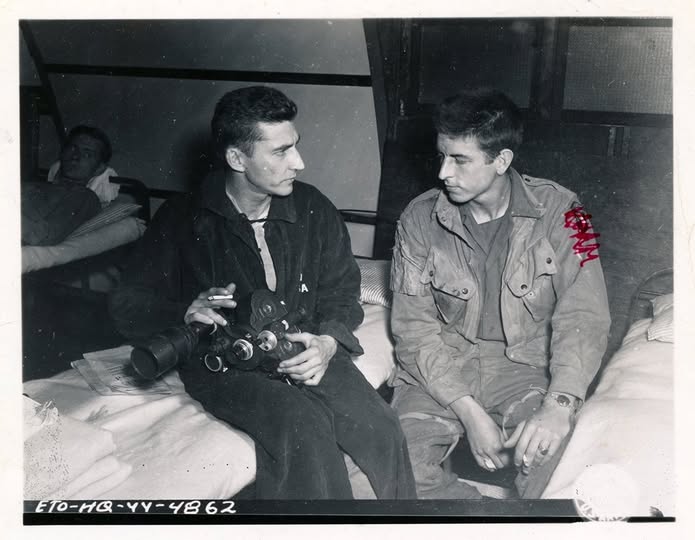
Richard enlisted in the US Army on 7th December 1942 at Grand Central Station and subsequently joined the 165th Signal Photographic Company. After Signal Corps basic training in Camp Edison, New Jersey he undertook more specialised training in war photography.
On 25th November 1943, he boarded the ship SS Pasteur bound for Britain. Due to her speed, Pasteur was unescorted across the Atlantic. 750 passengers could be transported in comfort but this was a troop ship and up to 20,000 soldiers were squeezed on. As Richard puts it: ‘Trip was rough over. Ship crowded of course. Wouldn’t take a thousand for it nor give them pence for another.‘
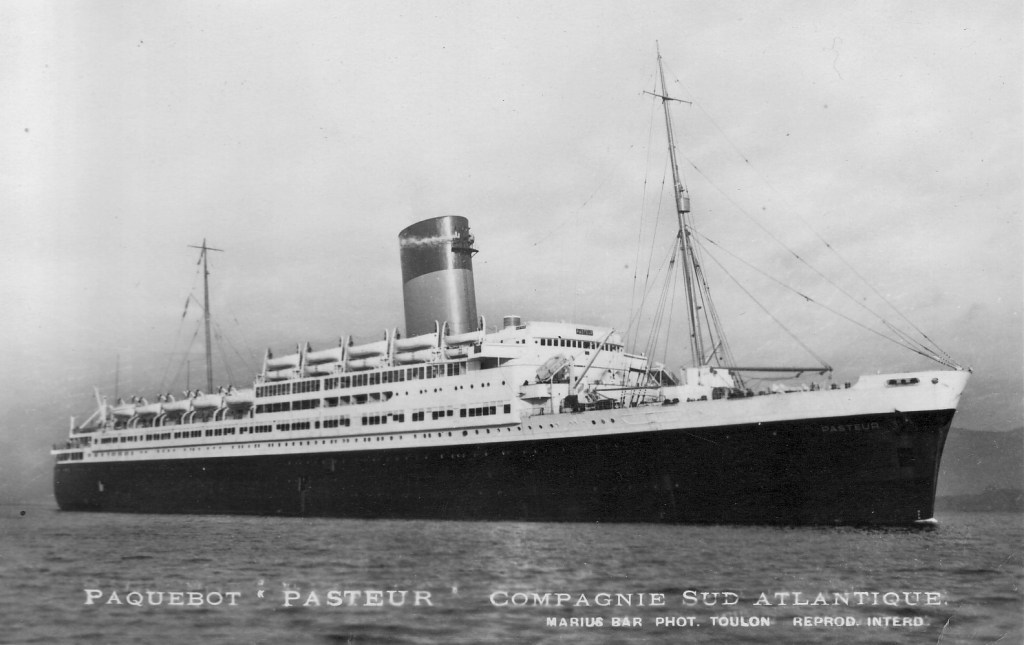
His parents both heralded from Britain so, as they sailed into Liverpool docks on 4th December, there must have been a sense of homecoming. The following day he disembarked from the Pasteur and boarded a train to an unknown destination. Their arduous journey ended when they reached Yate Station and were transported by US Army trucks to nearby Chipping Sodbury.
As a picturesque market town, Chipping Sodbury was an attractive destination for the American visitors, particularly Richard: ‘Have seen a typical English town & enjoyed it very much. Natives are very nice & friendly to us. We have good billets & chow now. Country is cold, wet & foggy. Much evidence that the British have & can take it. We Americans are very well off in comparison.‘
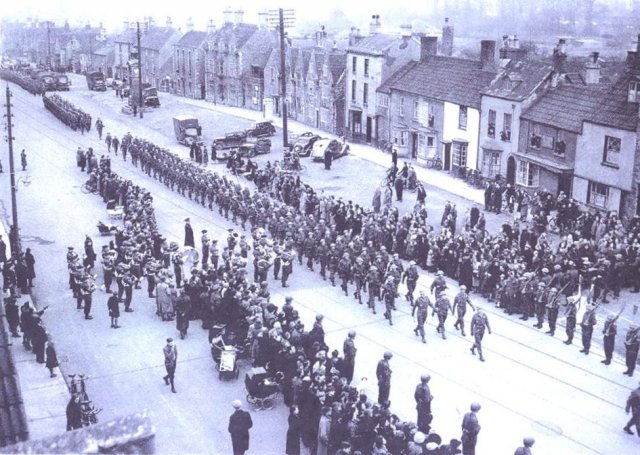
The men were billeted up and down Chipping Sodbury High Street as the 165th Signal Photographic Company’s headquarters were at the Grammar School there. Richard was given a place in the Beaufort Hunt pub, which, while he slept in an unusual place, he was at least not in a tent or hut: ‘They are water proof & fairly clean. Mine is in a former skittle alley long & narrow bldg. Manage to get ample coal for heat. Its very windy, cold, & rainy out now as usual.’
‘We have outdoor latrines where the temperatures is freezing, & everything is covered with frost, dew or fog, no lights so you just feel along.’

We know about his time in Chipping Sodbury thanks to a series of letters he wrote to his friend, Bobbie, which were later given to his daughters, Jennifer and Patricia. This is a selection of his reports:
14th December 1943
‘It’s been very cold here. Everything around these parts are covered with hoar-frost. Its beautiful. Have attended several dances & girls dance slightly smoother & slower.’

16th December 1943 (to his father)
‘I am enjoying the English countryside, towns, pubs & quaintness of the thatched houses & narrow lanes. Weather has been very cold & foggy of late, but we are getting accustomed to it now. Am in hopes of visiting London one of these days. Have written several cousins in Birmingham, but too early for a reply yet.’
19th December 1943
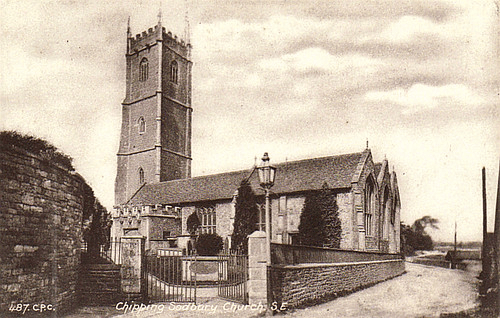
‘Went to Church Of England this morning & liked the beautiful old church very much. Service wasn’t any too much but enjoyed the procedures also choir boys marching up the aisle & their singing. Church dates back before 1400 & some of the original still standing. Less than 15 attended service.
Have made several hikes lately & find the country very nice. It must be perfectly beautiful in spring or summer. There are funny narrow lanes (roads to them) with hedges on either side. Hedges are most peculiar. They grow about 3 feet are cut off then those grow sideways making an impassable wall.
Nearly all roads & lanes have some form of road blocks to be thrown across in case of invasion. Even all signs were removed from the roads after Dunkirk & maps could not be obtained.
The beer is much more less [he writes both] alcoholic than ours. One can drink it all night & not feel it, but it’s hard to hold. It’s a must that we hit the latrine several times after going to bed otherwise one would just float away bed & all.
Pubs serve stout, bitter, ale, & a home brew called spitfire. Maybe they use that name cause it works faster, such seems to be the case. They have very little liquor. Some of their drink are gin & orange, lemon or ginger beer. Also sort of lemon soda & beer mixed. Scotch if you can get it is chased with beer or couple of ounces of soda. ‘
29th December 1943
‘Spent a swell Xmas & weekend. We had a real U.S. turkey dinner with all the trimmings. Afterwards spent balance of day with some English people. Had tea & supper & discussed our respective countries & their governments also war.
Haven’t seen any rumors in papers of an early peace with Germany. We all believe it will be sometime this summer. I think the invasion of Europe is not far off now. Wish I could say more but remember censorship.
The party we gave for the kids here went off with a bang. They each received presents, candy, gum sandwiches, cocoa & saw a play by our boys. Peter & the wolf. We laughed ourselves sick. They didn’t care much for our peanut butter though. It’s not sold in Britain.’
In January 1944, Richard discovered that the 165th Signal Photographic Company was ‘to be in the initial landings of the coming second front.‘ This prompted him to write about his training and time at Chipping Sodbury in more detail and concluded: Hope to get back to the US with God’s help...This is meant strictly as a personal record for myself or family in case I don’t return home.
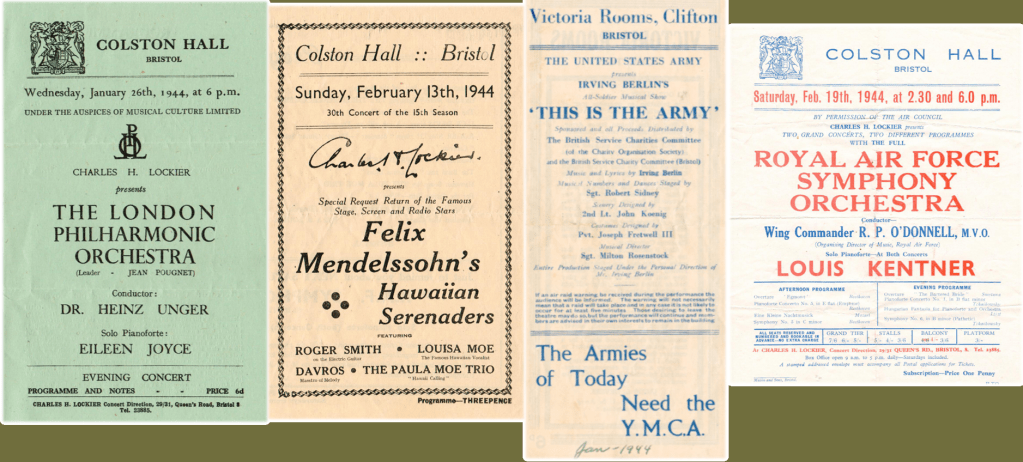
Trains and, possibly, US Army trucks allowed ready access to Bristol, which Richard took full advantage of. He saw several concerts in the Colston Hall (now Bristol Beacon) and plays in the Victoria Rooms including Irving Berlin‘s ‘This is the Army’.
Further letters reveal a little more detail about Richard’s life in Chipping Sodbury:
15th February 1944
‘It’s a beautiful moonlight night in this very old sleepy village & all is well. Very cold & bitter out but clear as a bell. Bombers been going over off & on for some time now, towards France.
Was on the range few days ago & made a good score with Carbine.
Find that there are a lot of friends of mine in England from the U.S. but can’t see them as yet.‘
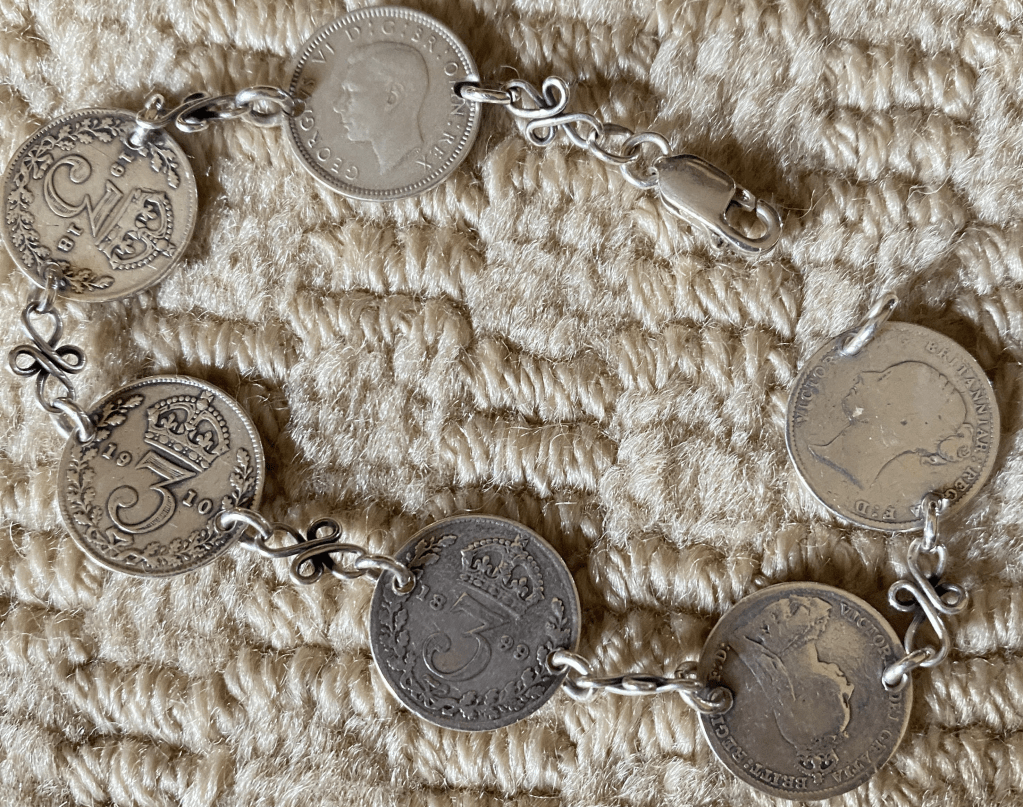
One souvenir Richard picked up while in the area was bracelets made from coins, which he sent back home as presents. He said they were made by nearby ‘British plane workers‘, which could be women at the Parnall Aircraft Factory in Yate.
At home, Richard had a girlfriend, Dot, whom he intended to marry when he returned to the US. He had, in fact, been married before but the relationship hadn’t lasted. While in Chipping Sodbury he did have a local girlfriend, which he told Bobbie about after he’d moved to camp: “Have been going off & on with a girl where I was stationed for sometime now, but couldn’t replace Dorothy. You know me Bobbie must have some fun & gaiety. The girl is even younger than Dot very nice, but would be out of place anywhere in the states.“
Richard left Chipping Sodbury on 29th February 1944 with L Detachment of the 165th Signal Photographic Company. They were attached to the 1st Infantry Division, the legendary Big Red One, which had already seen action in North Africa and Italy. Based at a camp in Blandford, Dorset, he started making movies and stills of the ‘crack outfit‘, which he described as ‘good Joes‘.
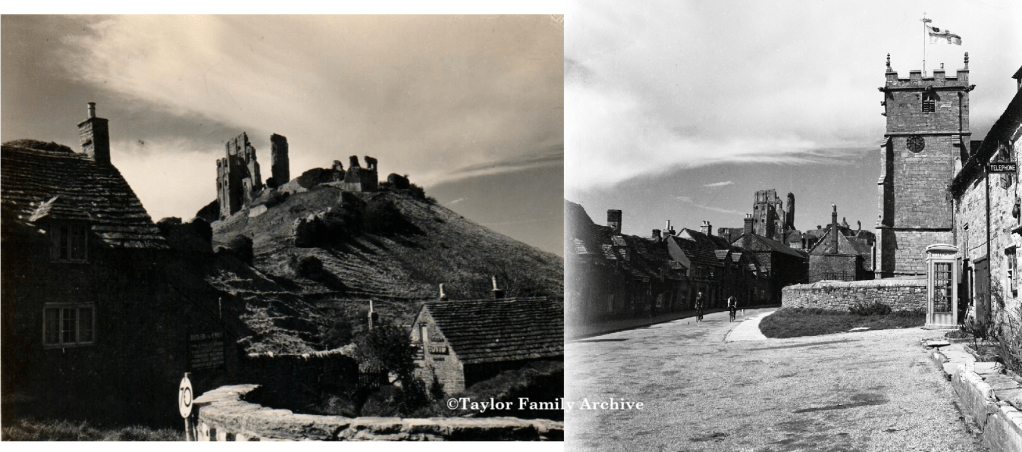
This also gave Richard a further chance to explore the area including Corfe Castle, which he described as “some old ruins of a famous castle. Place was very fascinating, like a Hollywood movie set.”
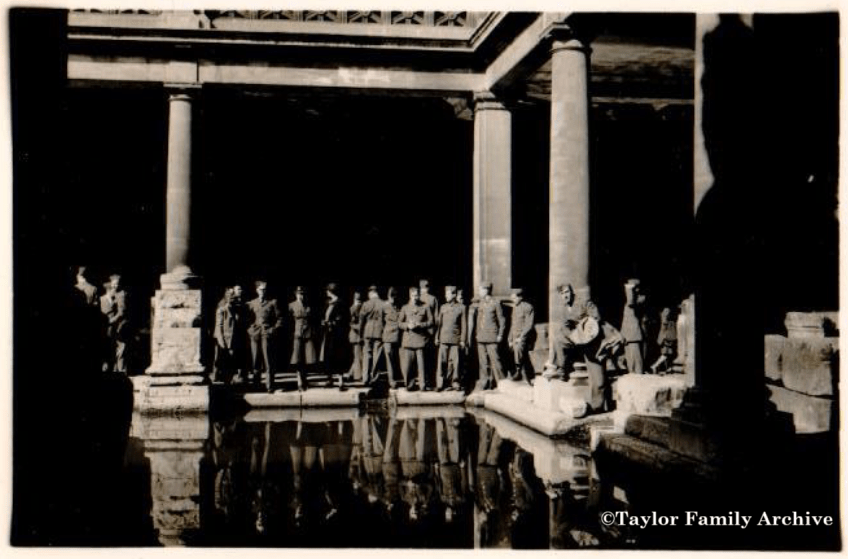
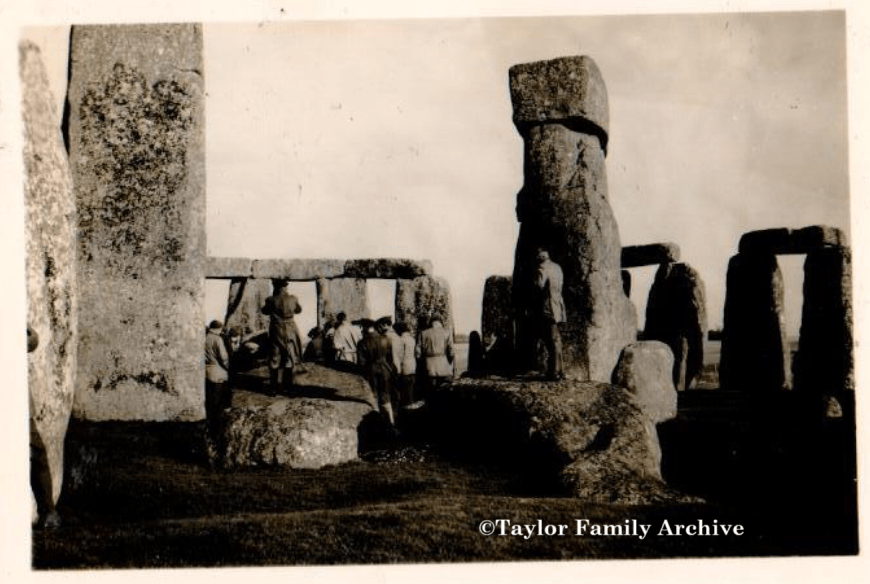
Other trips he made, either from Blandford or Chipping Sodbury, were to explore Britain’s earlier history in Bath and Stonehenge. Amongst his collection of photos are these two showing his fellow soldiers admiring the sites.
In a letter to Bobbie on 21st May 1944, he spoke of his apprehension of the coming battle: ‘We too are anxious about D-Day as we will probably be part of it. I figure the sooner it happens the better as I want to get back home if I live through it. It’s going to be rather rough, that I’m sure of so far.’ Sixteen days later he discovered just how rough it was and caught it on camera for all to see.
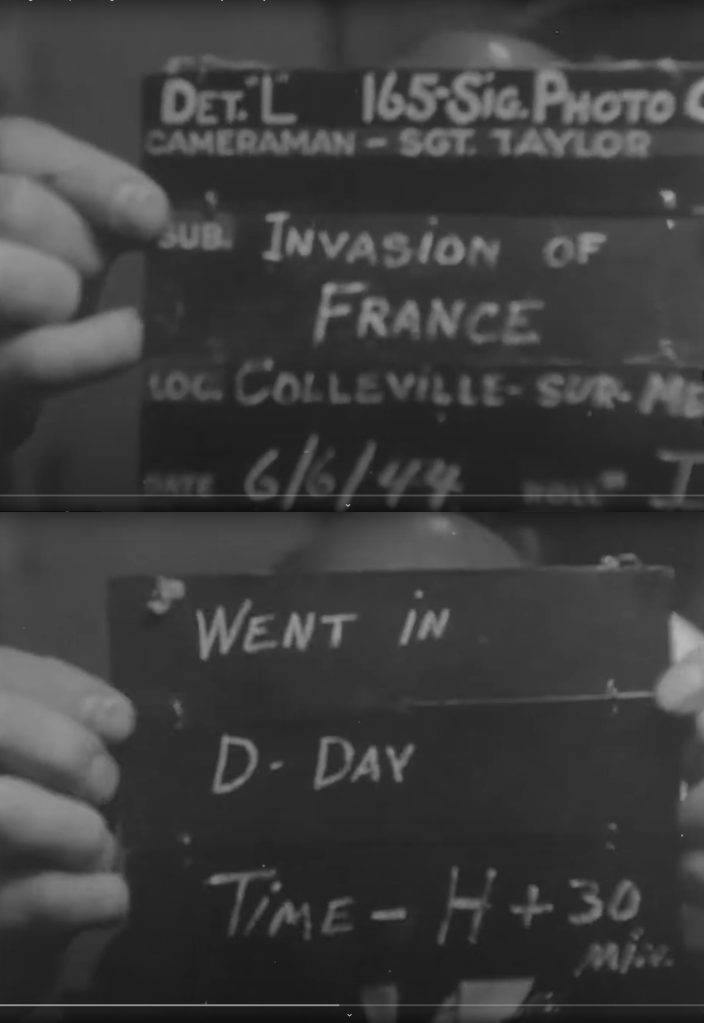
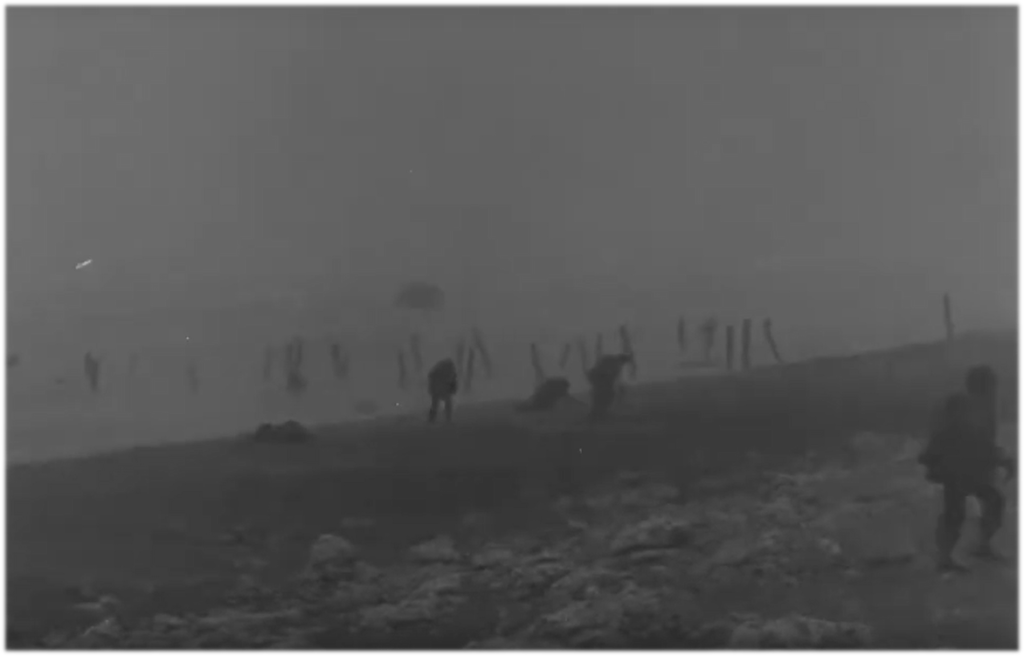
Sgt Richard Taylor landed in the third wave of the assault on Omaha Beach on 6th June 1944. He had already recorded footage of the landing craft as they approached the beach. Moving up the beach, desperately trying to avoid incoming fire from the German gun positions, he was hit on the arm. He made his way to the relative safety of the bluffs where, despite his injury, he once again turned on his camera and, this time, captured the only footage of GIs storming Omaha Beach.
Due to his wounded arm, Richard Taylor was evacuated back to England where he was treated in a US Army hospital in Malvern, Worcestershire. He was awarded the Silver Star for “Gallantry in action, Normandy, France, 6 June 1944.”
On 5th July 1944, Daphne McClurg, the landlady of the Beaufort Hunt, wrote to Bobbie to pass on news about his recovery:
‘He also rang us up last week and sounded very cheerful. When the boys first came over, they were billeted first here & my husband & mother liked Dick to come by and see us. He knows so much of shows and theatre people.‘
Once he had recovered, Richard returned to Normandy and continued to follow US First Army as they progressed through France and Belgium towards Germany.
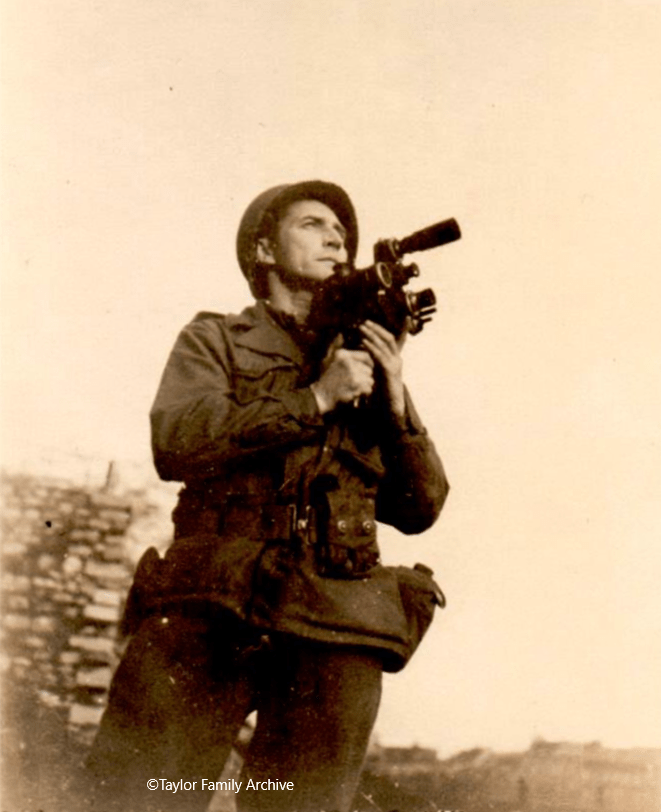
After the war he returned to the United States and married Dot. They had a daughter, Linda, but divorced in the mid 1950s. Richard married for a third time in Atlantic City, New Jersey and had two daughters including Jennifer to whom I am in debt to for her very generous help in writing this biography.
Richard died on 6th April 2002 aged 95 leaving a wonderful archive of his wartime photographic career and raw footage of American soldiers advancing on Omaha Beach on D-Day.
Sources
Personal letters and documents from the Taylor Family Archive
Draft card of Richard Taylor
SNAFU Docs YouTube documentary – Omaha Beach : The D-Day Cameraman Who Filmed Assault Waves on June 6, 1944 – WWII Then & Now
Channel 4 documentary D-Day: Secrets of the Frontline Heroes (French-made, may have a different title in other countries)
165th Signal Photographic Company Facebook group.
We’d love to hear your own stories. Please get in touch with us by emailing YanksinBristol@gmail.com
Copyright © 2025 – YanksInBristol.co.uk – All rights reserved.
 US Military in WW2 Bristol