
Merle James Hagerman was born in Comstock, Michigan in September 1921, the youngest of 9 children. He grew up during the Great Depression in Kalamazoo. His father worked as a fireman in the local paper mill but resources were scarce and times were tough.

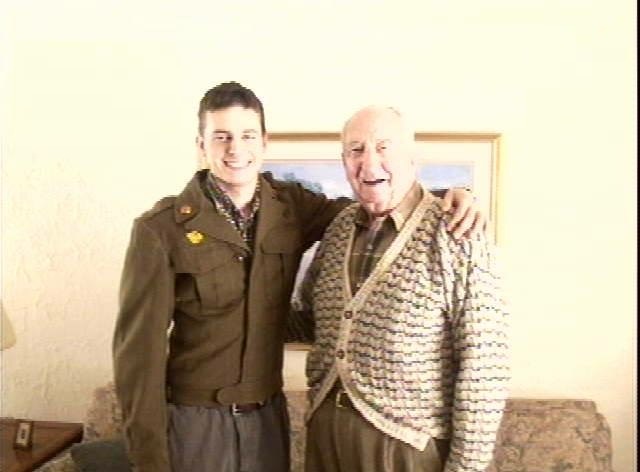
Following his education, with a year in high school, Merle graduated in the spring of 1940. He started working for the Western Electric Company in a technical role. With the US entry into the war, Merle enlisted into the US Army on 27th August 1942. Described as 6ft with brown hair, he entered as a semi-skilled worker with experience in woodwork. Having trained as a telephone engineer, he was drafted into the 17th Signal Battalion. His US Army uniform was the first new clothing he’d ever had.

The unit was activated on 20th November that year at Camp Crowder, Missouri with 82 enlisted men and 3 officers. 1943 was spent training with the 17th Signal Battalion providing communications support at the Tennessee and Northwest Manoeuvres.
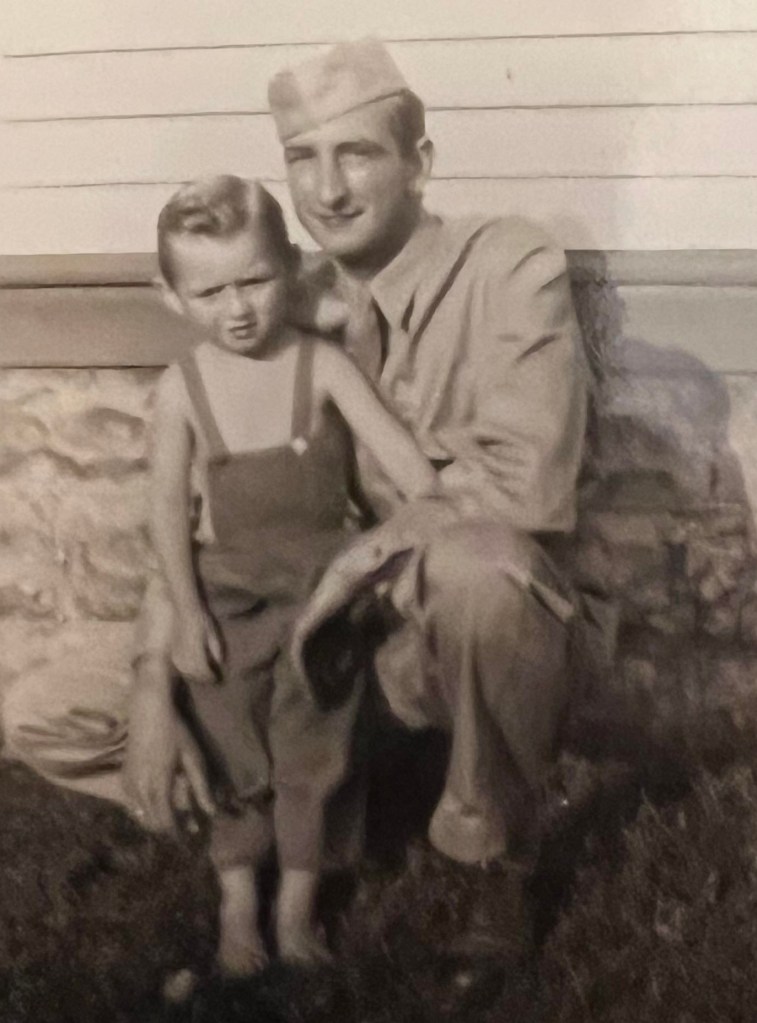
On 11th October 1943 the battalion entrained for Camp Shanks, New York arriving 16th October 1943 for deployment in support of 1st Army Headquarters.
By 1st November, the 17th Signal Battalion had set up camp in Patchway near RAF Filton. They were part of US First Army whose headquarters were at nearby Clifton College under General Omar Bradley. The first SHAFE (Supreme Headquarters Allied Forces Europe) Signal School was set up by the 17th and its members were the instructors.
https://static.smartframe.io/embed.jsThe above image is from Historic England’s ‘Baseball and Bombers’ series of aerial phots taken by the USAAF in 1943/44. The photo is taken with south at the top; the dual carriageway is Highwood Road with Cranbourne Road in the bottom-left corner.
Merle was lucky enough to be billeted with a local family. Their role would have only been to provide a bed for him; his meals were still provided by the US Army. The Army also laid on entertainment including shows where movie stars would perform for them. Another chance to unwind came in the form of the many dances they would put on in the local halls…
Winifred May Weeks was born in Almondsbury, north of Bristol in March 1924. During the war, she worked as an assistant in Mr Good’s chemists in Almondsbury or Patchway. She also worked as a Girl Guides officer and lived with her family at 19 Hempton Lane, Patchway.

Winifred and her friends were, of course, very excited by the arrival of young, good looking GIs in their village. Most of the local men were serving abroad.
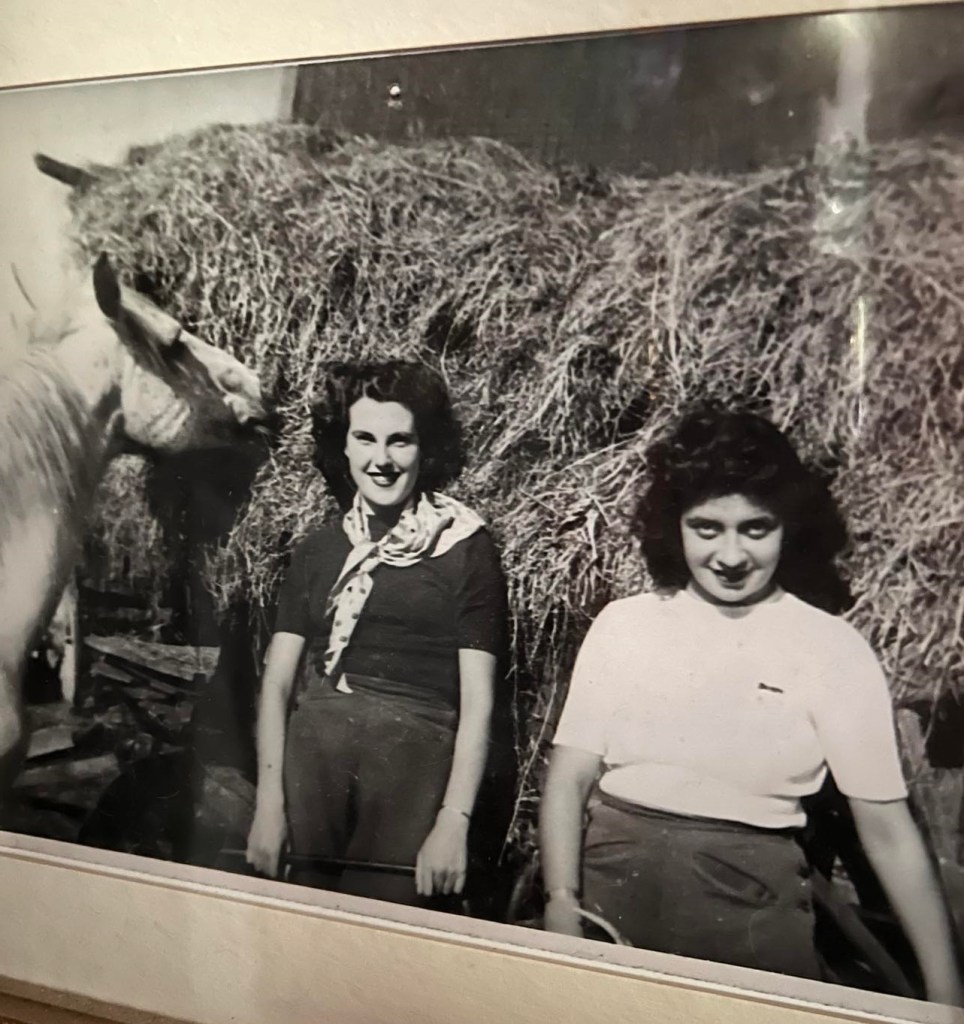
They wanted to look their best but couldn’t get new clothes so they would take old men’s suits and have them tailored into women’s skirts and jackets. As she was working she had to give most of her wage to her mum for household upkeep. To make themselves look more attractive, the friends had learned a few tricks. One was to use their eyebrow pencils to draw lines up the back of their legs to make it look like they were wearing stockings. Another was to rub a substance into their gums to make them more red and therefore make their teeth look whiter.
Winifred really enjoyed dancing so would look for a good dancer amongst the GIs. However, she soon learned that they didn’t like it if she wore woollen jumpers as the fuzz would come off on the soldier’s uniforms!
At one particular dance, Winifred met Merle but when he asked her to dance she turned him down. Eventually, she agreed to dance with him but quickly discovered that he was not at all a good dancer! Luckily, however, he won her over with his charm. They started dating and would particularly love going to The Bowl Inn in Lower Almondsbury.
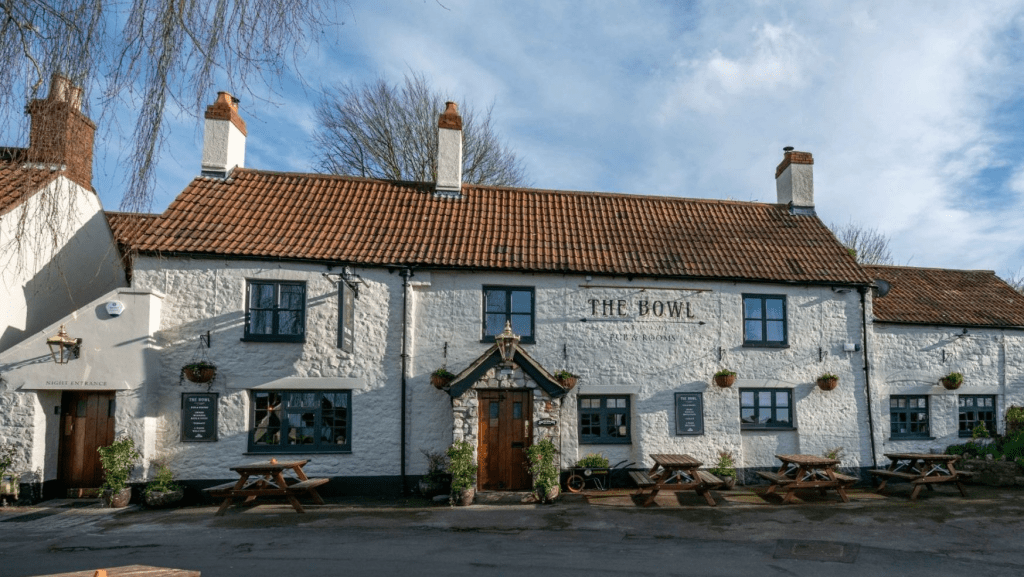
Merle was universally liked by everyone as he was polite with good manners. In England, he was known as Jim after Gentleman Jim. Luckily, his likability was also felt by Winifred’s father but he was understandably concerned about losing her to a life in America.

Another person who loved seeing Merle/Jim was Winifred’s young nephew, Ronnie. Whenever Ronnie saw Merle in the street he would get excited by his uniform and run up to him. Merle would pick him up and put him on his shoulders.
The inevitable had to happen though and Merle and Winifred were soon separated. After waterproofing their vehicle, they sailed for Normandy and probably landed with Company A of the 17th Signal Battalion on Omaha Beach on D-Day plus 3 (9th June 1944). As Merle drove his vehicle off the troop ship, he stopped on the beach to remove the exhaust cover. He was promptly cussed by the troops on the beach showing that it still wasn’t a safe place to be.
In Normandy, the 17th set up two complete communication centres in vans and followed First Army across France through Belgium to Germany. This included being involved in the liberation of Paris where he experienced the sight of ecstatic Parisians at the Arc d’Triumph. By May 1945 they had moved 45 times and were later commended by General Bradley in his autobiography ‘A Soldier’s Story’.
Following the 17th Signal Battalion’s involvement in the Battle of the Bulge (16th Dec 1944 to 28th Jan 1945), Merle was given a short period of leave. While many of the men took the chance to visit Paris or the French Riviera, Merle was destined for Patchway. He sent a telegram to Winifred telling her to get a ring and he would be back so they could marry.
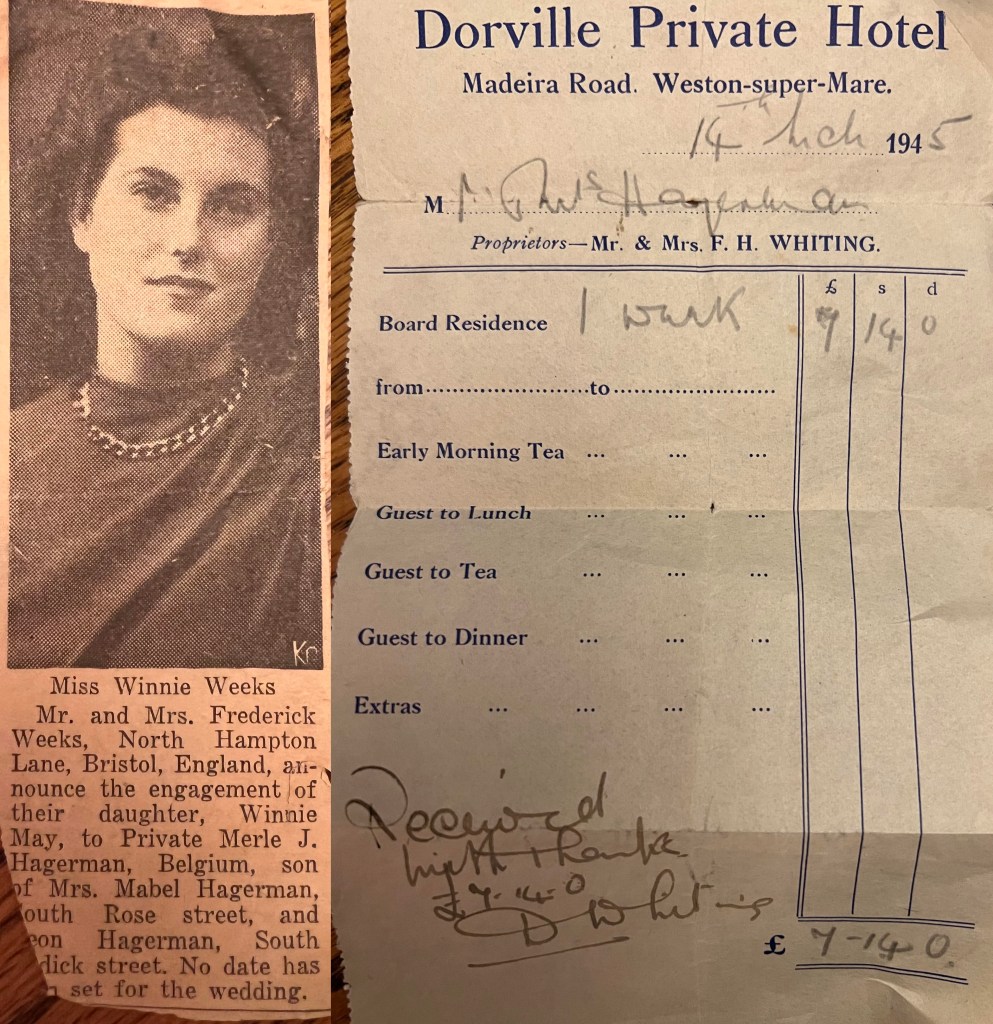
They wed in St Teresa’s Church in Filton on 7th March 1945. This was the day after Winifred’s 21st birthday meaning that they didn’t have to get special permission. Outside the church, a local girl gave Winifred a paper horseshoe as a symbol of good luck for their marriage.


Following their wedding, they had a week-long at the Dorville Private Hotel in Weston-super-Mare.
With their brief start to married life over, Merle returned to service continuing the Allied advance into Germany. He experienced the full horror of the Nazi regime when they were involved in the liberation of the Buchenwald concentration camp.
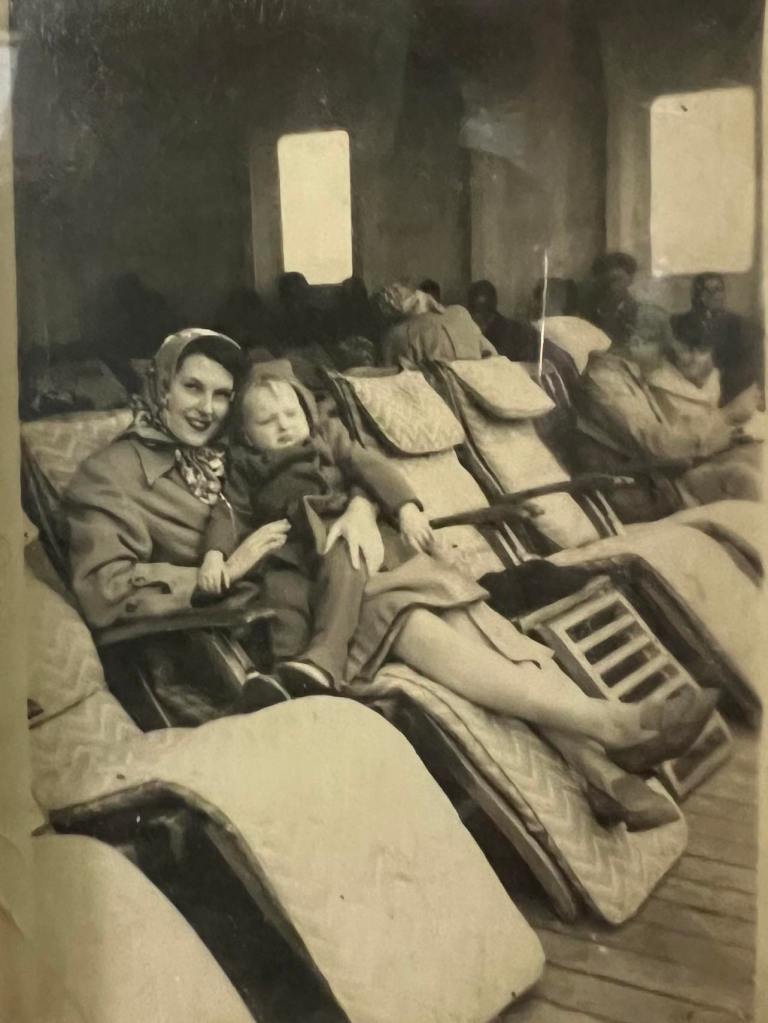
Following VE Day, Merle returned to New York and was demobbed. Winifred followed him with many of the war brides from the West Country. She arrived at Southampton ready to depart on the ‘Queen Mary’ but being neither pregnant or with children she was put on the ‘President Tyler’ which looked like a dinghy be comparison. Halfway across the Atlantic the ship ran out of fuel.
After a horrible crossing, Winifred arrived in New York but Merle wasn’t there. He had been expecting her on the Queen Mary and when she didn’t arrive he wondered if she had changed her mind. Thankfully, despite the chaos at the docks, they found each other.
They started their married life together in an apartment in Kalamazoo. Merle got a job as a fireman on the railroad, which he worked on for 47 years. With growing experience, he was promoted to engineer (driver) and then became a rail foreman.
At first Winifred worked on the perfume counter at the local department store. Her English accent was seen as something of an asset for greeting customers as they entered the store. She worked there until her and Merle started a family.
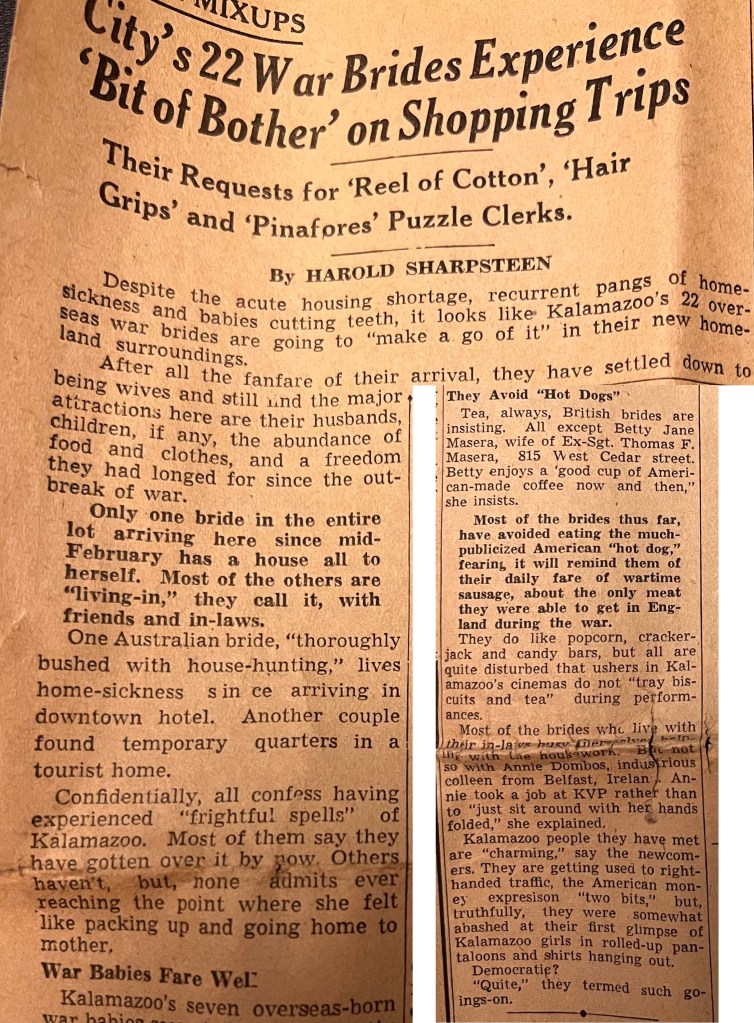
They always retained their links with England and stayed friends with people they had know in Patchway but could only make the rare trip back to see Winifred’s parents. However, they did get to host those friends and family when they came to the US. Winifred also regularly met with her fellow war brides in Kalamazoo all through her life.
Like many GIs, Merle ‘liberated’ lots of Nazi souvenirs, a sign of having defeated their evil enemy. He took it back to the US but Winifred insisted it stayed in their basement. They had Latvian neighbours and she realised they could have experienced appalling treatment under the Nazi regime and wouldn’t want to be reminded of that time.
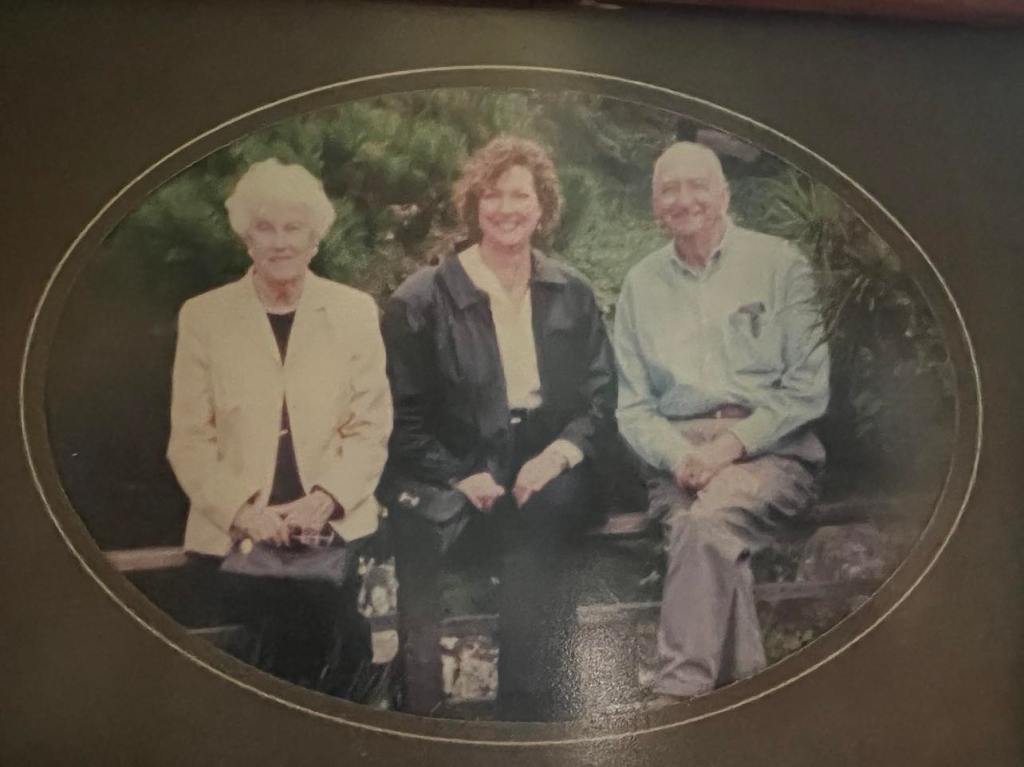
After a long, happy marriage, Winifred died in December 2001 followed five years later by Merle. They are buried together with Union Jack and the Stars & Stripes on their shared headstone.
Sources:
Personal interview with Lori Visser, daughter of Merle and Winfred – 12th September 2023
All family photos supplied by Lori Visser with many thanks.
17th Signal Battalion Association Facebook Group
17th Signal Battalion History by Sam Lietz & Rudy Tellmann
(Marilynn K. “Sam” Lietz –COL, USA SC Retired (Commander 17th Signal Battalion 1997-1999) Rudy Tellmann – (Company B-Message Center Operations -1956-1958))
Additional help provided by ‘Bristol Then & Now Questions‘ on Facebook
Draft Cards found on www.fold3.com
We’d love to hear your own stories. Please get in touch with us by emailing YanksinBristol@gmail.com
Copyright © 2025 – YanksInBristol.co.uk – All rights reserved.
 US Military in WW2 Bristol