
I interviewed Megan in December 2021 after I had been able to find post-war details of John Reddy, who lived with her in Fishponds in WW2. We corresponded a number of times by email afterwards where she helped me with additional details. I have used her own words wherever possible either verbal or written. Sadly, she died in April 2022 after a short illness.
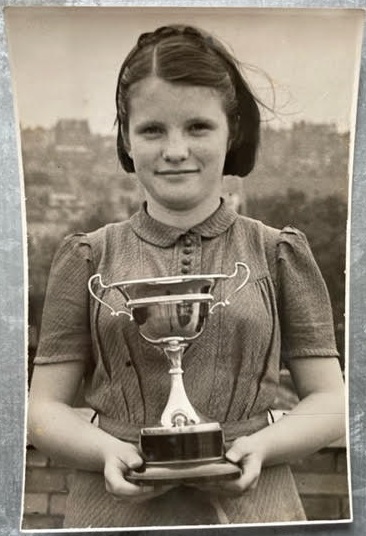
Megan Liddiatt was born in 1930 and for much of her early childhood she lived in 376 Fishponds Road, a house which “had not been brought into the twentieth century at all”.
One of her early memories of the war was after the Dunkirk evacuation returning soldiers from the B.E.F. were temporarily housed in wooden huts in Eastville Park opposite her house. Megan’s mother and other housewives were concerned about the conditions these poor soldiers were in and offered them a bath, some food and a comfortable chair to sit in. The house had an outside toilet, which was accessed through the kitchen which was home to the tin bath. With a parade of soldiers passing through, if Megan and her sister wanted to use the loo, they had to take their chances between one solider getting out of the bath and the next getting in! Megan’s job was to keep her sister quiet with shattered soldiers sleeping all over the house; “some of them were clinging to their rifles like grim death.”
With the Battle of Britain and the Blitz, the war was fully brought home to the people of Bristol but daylight raids were rare. On one occasion, however, “it was beautiful sunny day and we heard these planes, we came out into the front of the houses and we were looking up at these planes and the sirens hadn’t gone. Suddenly, someone said ‘Oh my God, they’re Jerries!’” This was the 25th September 1940 raid on the Bristol Aeroplane Company in Filton, which resulted in the direct hit of one of the air raid shelters and over 200 deaths.
Every Saturday, Megan would go with her sister and mother to the Co-Op Education Centre in Broad Weir for drama and elocution lessons and did so as normal on 23rd November. The following evening came the start of the heaviest raid of the Bristol Blitz. Megan returned with her mother the next weekend and saw that the education centre had survived but they walked up the Pithay to see the damage. The whole area was barricaded off but Megan remembers her mother “standing there with tears running down her face to see how dreadful it all was.”

Life continued as normally as it could with Megan going to school – Fishponds College Girl’s School then Fairfield Grammar – even after a night in the shelter. “I was going on the bus perhaps with a friend all over the place to be in concerts sometimes entertaining servicemen and women. I can remember going on the bus one evening to Avonmouth to be in something or other”.
The US military started arriving from 1942 and towards the end of 1943 everyone “knew that the Americans were coming and every house was informed that if you have a spare bedroom you had to have an American with you because they didn’t have enough barracks to keep them all together. My mother was not very keen to have an American. If people weren’t British she was very suspicious about them! So she went to the police station and said ‘so have you got any constables that need lodgings or anything?’ They did but the billeting officer came just after this fellow had left so he said ‘I’m sorry Mrs Liddiatt, you have to have an American’”.
An American duly arrived and this was Captain John Reddy of Chattanooga, Tennessee but Megan and her sister were shut away for nearly a week before her parents decided he was a “suitable person” for the girls to meet. Born in 1906, prior to the war, John had been a legal adjuster and he was performing administrative duties within the US army.
“Once [the Americans] arrived and we found them on the whole to be such nice, kind & grateful people to the civilians they were generally made very welcome. They were very much a curiosity with the relaxed attitude between the various ranks of their army and their so smart uniforms and, of course, their generosity. For us it meant we had all sorts of food that we hadn’t seen for years and years because the Americans had an abundance of food. They used to bring it home for whoever was there. I particularly remember him bringing joints of cooked ham.”
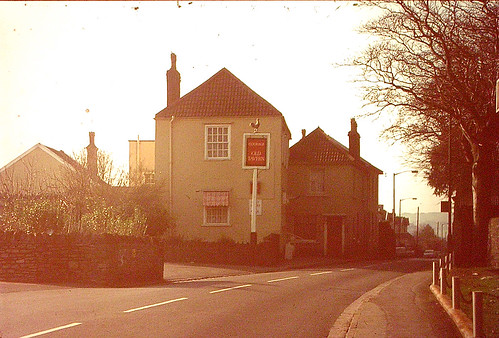
“The interesting thing about it was that all the ranks mixed together. It didn’t matter what rank they were, Mr Reddy used to go and sit out on our front wall and a whole load of them would gather there to perhaps go to the pub (The Old Tavern, Blackberry Hill) or whatever they wanted to do and there would be all ranks from privates up to Mr Reddy who I think at that time was a captain.” Although as Megan says, this was only with white soldiers as he had racist views which led to arguments with her parents about how black people were treated in America.
“We did not see convoys of American lorries or jeeps as we had seen of our own army earlier in the war. My memory of them is very much that they walked in groups of friends in their off duty time. It was something of a novelty to see so many young men – most British young men were in the forces so living in barracks with only occasional leave to come home.”
“When we did get to know him he was a lovely man, very polite very well behaved. He thoroughly enjoyed the fact that our bathing and toiletry facilities were so primitive, he never grumbled. He could have a bath or shower at the barracks no problem there but he used to loved to sit late in the evening and have a cup of tea and some bread and cheese with my mother and father and just talk”.
In 1944, there was a fair in Eastville Park opposite their house. Megan’s mother gave her sixpence to spend and told her to take her sister. “When we went over there the fair was heaving with American soldiers amongst whom was our American with some of his friends and he said ‘come along come with us and we’ll have a good time’ and I said ‘No thank you very much I’ve got to go home’ and I went straight home with my sister. You know at that stage I was getting on for fourteen years old girl, you know how different life is now. Perhaps my views on that time would have been very different had I been sixteen & not fourteen! Certainly I never thought of them romantically, I would much rather have my head in a book!”
This may have been on 17th May when a US Army band played in the park not long before their departure. “Mr Reddy was in the house one night and said ‘see you tomorrow’ and we never saw him again. It was very strange, where were they all? They just disappeared, completely disappeared.” The answer Megan found out a couple of weeks later was because they had left in preparation for D-Day.
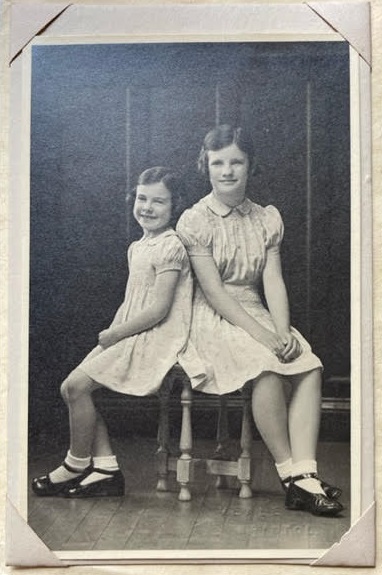
“It certainly was an exciting time and when they were gone almost overnight life became so dull without their happy, relaxed nature and we were back to rationing and ordinary everyday restricted wartime lives. The children particularly missed the candies & chewing gum when they were gone though my mother would not allow myself & Nevette (my little sister) to have chewing gum – not considered a ladylike thing at all!”
Megan’s family heard from John Reddy twice before the end of the war. The first was written on Friday 4th August 1944 as the Allies advanced through Normandy. He was part of the Headquarters Advanced Section, handling civilian claims, and was sleeping in a tent in an orchard and cow pasture. He must have headed to London before Normandy as he speaks of a near miss with ‘one of those damn buzz bombs’, a V1 flying bomb, and hoped they didn’t find their way to Fishponds. He spoke affectionately of his time at Megan’s house and how her parents brought him a morning cup of tea and evening supper. ‘I shall never forget all of the many kindnesses you showed me while a guest in your home and they will remind me of my pleasant stay in good old England.’
His second letter was written just before the end of the war and showed his relief at the dropping of the atomic bomb. War having ended in Europe three months earlier, he was looking forward to returning home but was kept busy with French civilian claims. By then he had been promoted, apparently to Major or Lieutenant Colonel.
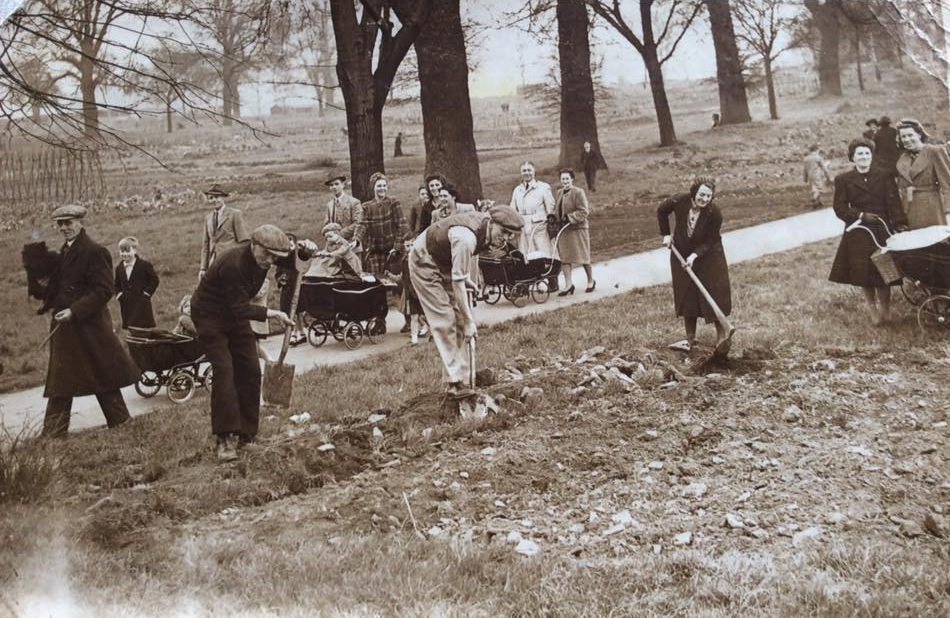
“And the last thing of all that I can say [about the war] is the German POWs. They were billeted, the POW bases were, some were in the area of Frenchay. They were able to go out and walk around near the end of the war. After the war they were still here and they would be dropped off and you would see them in Vassals Park, which, as children, was our favourite place to go.
“We used to go on nature walks from school there so you saw these German POWs and some of them had a smattering of English and they would talk as best as they could. The ones that could speak English would speak for their friends, many of them were from East Germany and were absolutely petrified about what they would find when they got back to their homes or whether they would go home or whether they would try and stay in England”
As for VE Day, “there was a feeling of anti-climax about it. I can remember going into Bristol to hear the Lord-Mayor make a proclamation from his carriage; well, the carriage was a clapped out old thing. I expected something really beautiful, something wonderful but it was falling to pieces. The celebration came a couple of days later really” on the green by the Old Tavern on Blackberry Hill. Megan’s aunt and uncle ran it and many American servicemen went there as it was next to the hospital. “ I was very nearly sixteen and there was a fellow and he came along in his RAF uniform and I was dancing with him, oh, I did think I was the bees knees, it was wonderful”
As for John Reddy, he returned to America and back to Chatanooga where records show he was the United States Attorney for the Eastern District of Tennessee until 1969.
We’d love to hear your own stories. Please get in touch with us by emailing YanksinBristol@gmail.com
Copyright © 2026 – YanksInBristol.co.uk – No AI – All rights reserved.
 US Military in WW2 Bristol