
From an interview in the Imperial War Museum Oral History Archive. The full interview can be heard here. Additional details are from his obituary.
Kenneth Herbert Long was born in Parma, Ohio in 1924 and grew up in Cleveland having moved out of their big house due to the Depression. He started at university in Oxford, Ohio where he volunteered for the army reserves in order to postpone his deployment overseas. He just completed the first year when he was called up in May 1943 to undertake basic infantry training in Georgia.
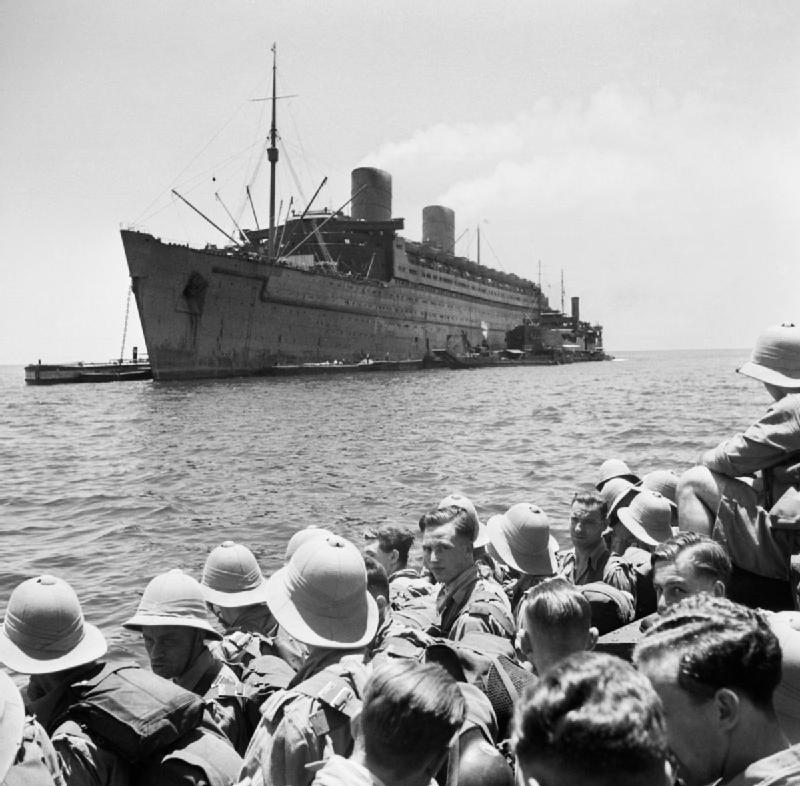
Upon completion of training, he set sail for Britain on 25th November 1943 on the Queen Elizabeth with 14,000 other men on a five-day voyage across the Atlantic. Being a British ship, it was his first experience of English cooking “it was soft, everything seemed to be boiled!” They queued for two hours, ate then got in the queue for their second meal of the day. Going overseas he told a psychologist he was ready but later admitted “I was one scared kid”.
On arrival in the Firth of Clyde, they took the overnight train – which he found curiously small compared to the American trains – down to Birmingham. It turned out to be a much longer stay than intended – six weeks – as the army had lost his records, which allowed him plenty of time in the pubs and meet ladies.
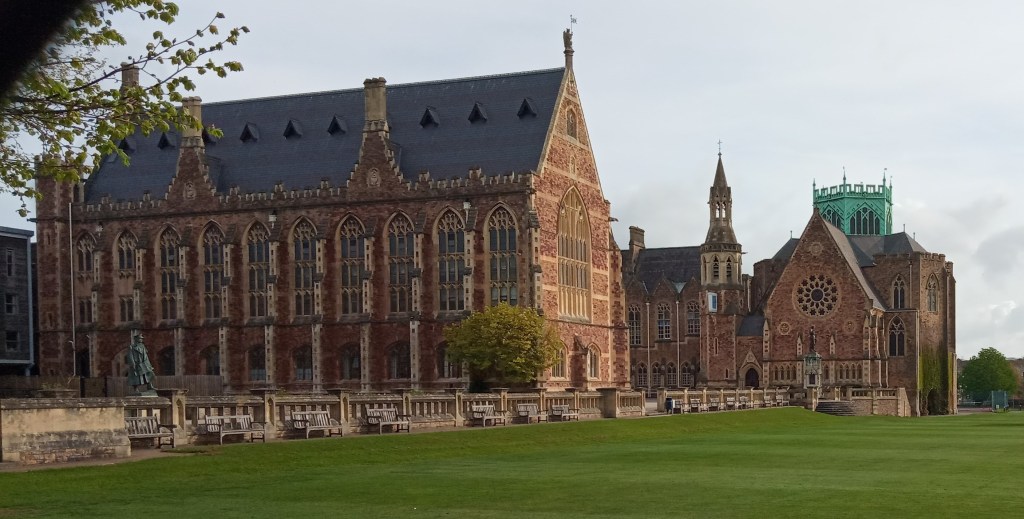
Eventually, he was put on the train down to Bristol where he joined the headquarters of the US First Army at Clifton College being billeted in the boys’ dormitories. He was impressed at the size of the houses there. In his time in Clifton, Ken never actually saw General Omar Bradley, head of the First Army, as he was usually in London. His personnel officer was Major Strom Thurmond who later became a senator for South Carolina. When interviewed by Major Thurmond, Ken said he wanted to help people and was able to type so was placed in G5 Section which was for Military Government/Civil Affairs in Welfare. Their main mission was, when the invasion of France came, to “get the civilian population off the roads; feed them, home them, clothe them.”
He was in Bristol for three months where he said the weather was “foggy, rainy – it was the winter months” and even in the office he would have to put up the blackout curtains. There wasn’t much to do after work so, being young, he would go to the pub or the USO (United Services Organisation) where they could dance, eat and socialise. There he met a young lady in the WAAF (“she was so beautiful”) and he would take her for walks on the Downs. He describes being in a young, foolish love and asked her to marry him but she looked at him like he was crazy.
Another time, he met some ladies from Cardiff who had an apartment in Bristol so they would come over at the weekend and they would meet them. He would phone these women with the US army phone, which he was sure he wasn’t meant to but no one ever found out.
There wasn’t much mixing with British soldiers. The only time he can recall was when he “was going to a canteen one night and I couldn’t see my hand in front of my face and I heard a Canadian voice and he took me in to it and there were British soldiers in there but we didn’t get to talk too much.” He later learned about a British resentment towards Americans because GIs “made more money and they flaunted it and this put the British soldier at a disadvantage for the competition for the young ladies.” However, he didn’t have much spare money. He was paid $50 a month but he sent $30 of that home to save for college when he got home.
One trip Ken did make was to Bath, which he describes as a sad occasion because “one of our sergeants had been out with a girl and caught syphilis so I went to meet him” as he was in hospital there.
Another young lady he met and fell in love with he gave her his high school ring but then regretted this romantic act. Ken was going to ask for it back but this was June 1944 and that night he was shipped out in preparation for going to France. From his truck, he waved goodbye to her and to his ring. He wrote to her to ask for it back but she said “you’re not going to give that ring to someone else and have them disappointed” so the ring remained in Bristol.
Just before D-Day, Ken says they were told to waterproof their jeeps with putty so he knew “things were coming but we just didn’t know when.” Ken arrived on Omaha Beach in Normandy on an LST with his jeep with the third wave of his Section around 20th June 1944. The first thing he remembered was going up a hill and being confronted with “all these crosses; that was discouraging to see”. They were given a house to use which was the first refugee camp they had set up.
They followed the US Army through France, Belgium and Germany supporting refugees and was caught up in the Battle of the Bulge being locked up by his own side in the confusion caused by German soldiers deceptively dressing up as GIs.
After the war Ken returned to college and became a grade school teacher and counsellor. In 1978, Ken returned to Europe with his sons and among other experiences, revisited Bristol and was able to get into the mess room in Clifton College. He died in 2012 in Rock Hill, Missouri.
We’d love to hear your own stories. Please get in touch with us by emailing YanksinBristol@gmail.com
Copyright © 2026 – YanksInBristol.co.uk – No AI – All rights reserved.
 US Military in WW2 Bristol