
Hilary Brock was born in Bristol and spent her first years living at 47 Somermead, Bedminster. On 3rd September 1939, 5 year old Hilary was playing in the garden and came in to see the worried expression on her parents’ faces. War had been declared on Germany.
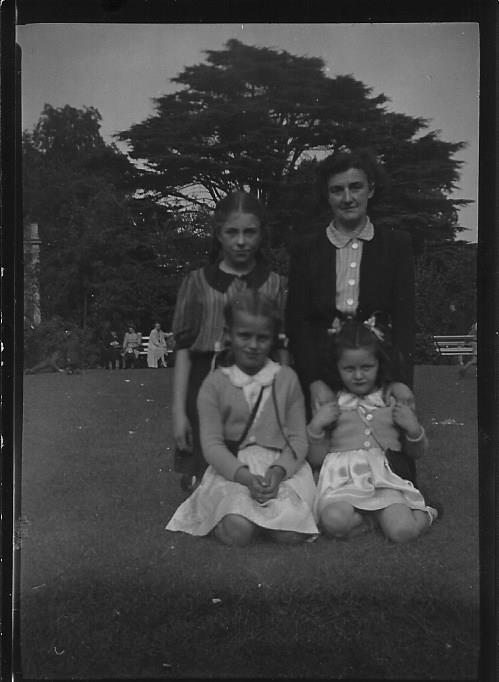
The threat and effects of bombing meant the family moved house several times during the Second World War. Within a year of the outbreak of war, they moved to Friendship Road, Knowle. On 24th November 1940 Hilary had gone upstairs to go to the loo but looked out of the window before returning. Across the sky she could see what looked like lots of brightly lit Christmas trees falling from the sky onto the centre of Bristol. They were chandelier flares used by the Luftwaffe to illuminate key targets in Bristol. No air-raid siren had sounded by this point but Hilary alerted her father and they made their way safely to the shelter. This was the first raid of the Bristol Blitz, which would continue for nearly six months.
During a lull in the bombing that night the family went round to the Hilary’s uncle and aunt’s shop at 249 Redcatch Road to see if there was any damage. They had been secure in the shop’s cellar but outside the Friendship Inn in Axbridge Road “was a tangle of shredded telephone wires”. They went to the top of Redcatch Road where Hilary could see Bristol was in flames “and I have never forgotten that sight.”
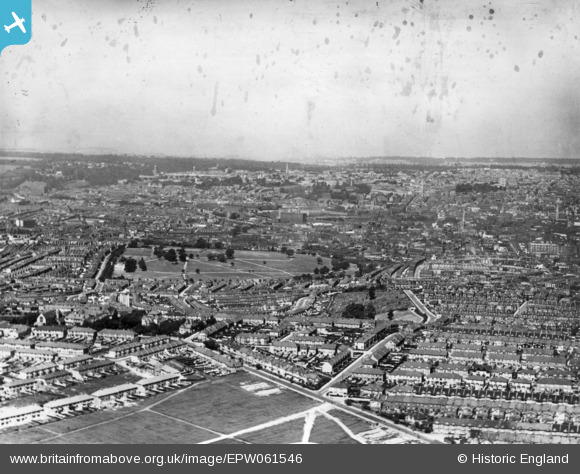
By early 1941 nowhere was safe in Bristol so Hilary was evacuated to the North Devon town of Barnstaple. She returned in January 1942 to Metford Road in Redland Green before moving onto 14 Harcourt Road, Westbury Park. She had learned from her parents that 47 Somermead had lost most of its roof twice! One bomb had landed in the road at the front while the second one hit the back garden. Hilary’s mother said she “could sit on the toilet and the see the stars overhead”. Such was the nature of life that Hilary’s mother had moved to family in Worle then friends in Weston-super-Mare before returning to Bristol
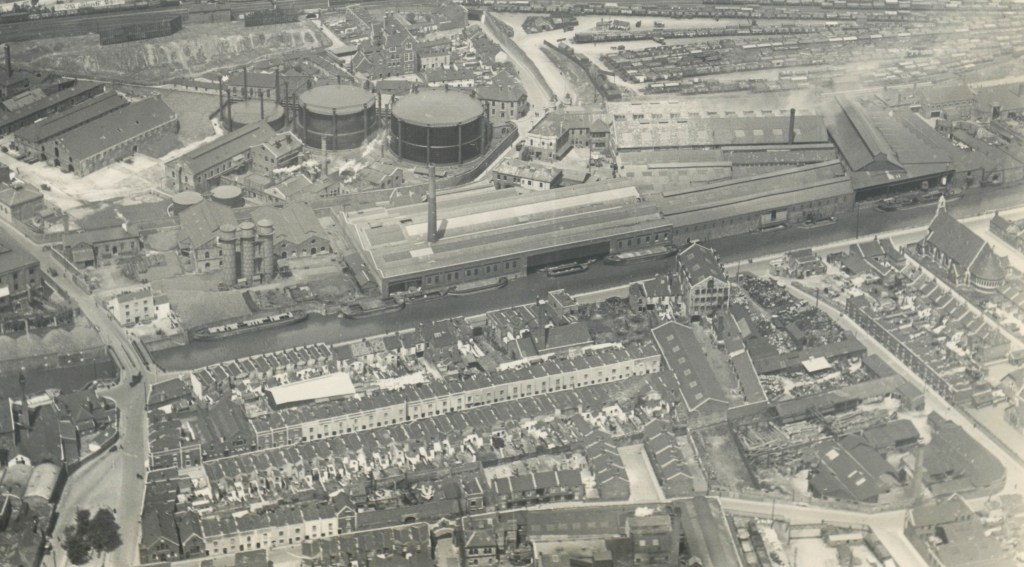
Hilary started at Westbury Park school while her father was working in the stores at John Lysaght and Co, Netham where, little did she know, preparations were being made for D-Day.
Another significant sign of the preparations for the much-anticipated invasion of German-occupied France was the arrival of the Americans to Britain with thousands descending on Bristol. While no Americans were billeted in Harcourt Road, many were in the houses facing onto the Downs. On North View GIs were a common sight on the streets as a shop on the corner was likely a PX – a Post Exchange where US soldiers could purchase products from home. It also introduced Bristolians to new and exciting treats although when Hilary tried dried bananas and peanut butter for the first time, she was not impressed! Hilary remembers that all the children would ask that classic question to the Americans “Got and gum, chum?”.
GIs and US Army officers could be seen everywhere around Henleaze, Westbury Park and Clifton. This was partly because General Omar Bradley’s First Army Headquarters was based at Clifton College and because two large areas on the Downs had been taken over for US Army vehicles. On the area from Sea Walls up to Ivywell Road there was an armoured fighting vehicle servicing compound.
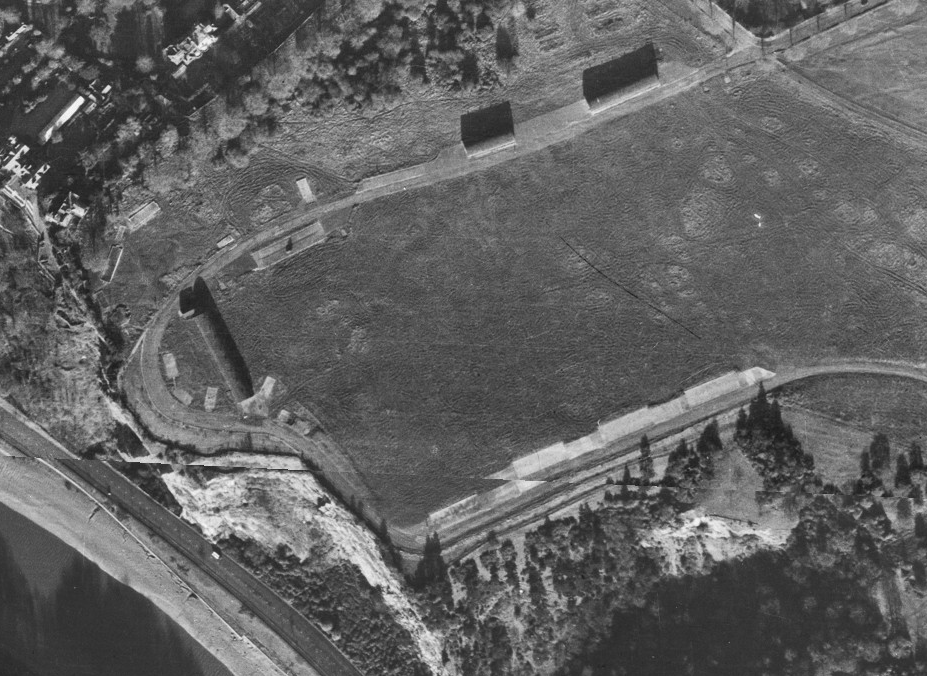
Another large area requisitioned was a quadrilateral section of Clifton Down bounded by Ladies Mile and Upper Belgrave Road. This provided parking for 149 vehicles with six huge canvas hangars (shown in red on the map below). One of the units parked there was the 32nd Machine Records Unit (Mobile) whose noisy generators had not been appreciated in Clifton College grounds.
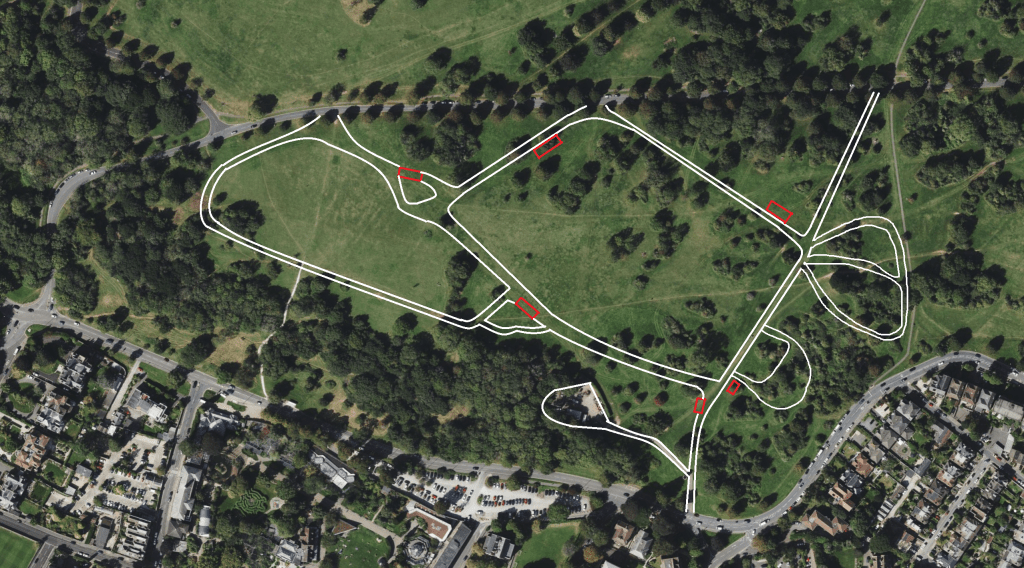
This was all unknown to Hilary as both sites were barricaded with barbed wire and camouflage netting with no civilian access. However, Hilary frequently saw US Army vehicles coming and going. Many other parts of the Downs were available and so she was able to go for walks with her cousin, Tony, into the gully between the two sites. It was an all-too-common sight to suddenly stumble across a G.I. and a young woman intimately engaged!
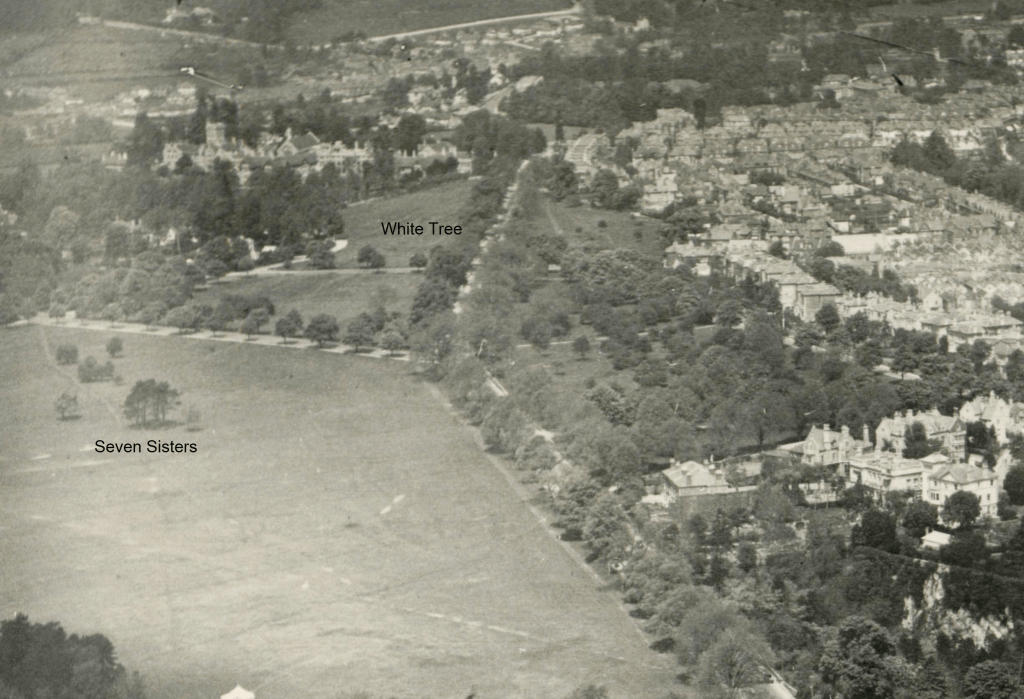
One place that Hilary did see American servicemen at their leisure was on the area between the white tree and the Seven Sisters in the north-east corner of the Downs. A series of baseball pitches had been marked out and their games provided Hilary and her friends with great entertainment. Baseball was a novelty for Bristolians so much so that the Western Daily Press printed rules especially for the locals’ understanding of the game.

And then one day, most of them were gone. At the end of May 1944, the vehicles quietly left – or as quietly as hundreds of purring engines can be – and headed along the Portway to Avonmouth. Here they embarked on the invasion of Normandy and the eventual Allied victory over Hitler’s forces.
Soon after D-Day, Hilary’s father took her into his workplace at John Lysaght & Co. The vast storerooms were just bare concrete. What Hilary hadn’t been told was that the factory had been busy making parts for tanks and Bailey Bridges, which were all on their way to Normandy.
The US Army did remain at the servicing facilities on the Downs and at Clifton College until the end of the war so they could still be seen but fewer in number. Around this time, Hilary’s father had changed jobs and moved to London, which he did just in time to experience the horror of the V1 and V2 bombing campaign.
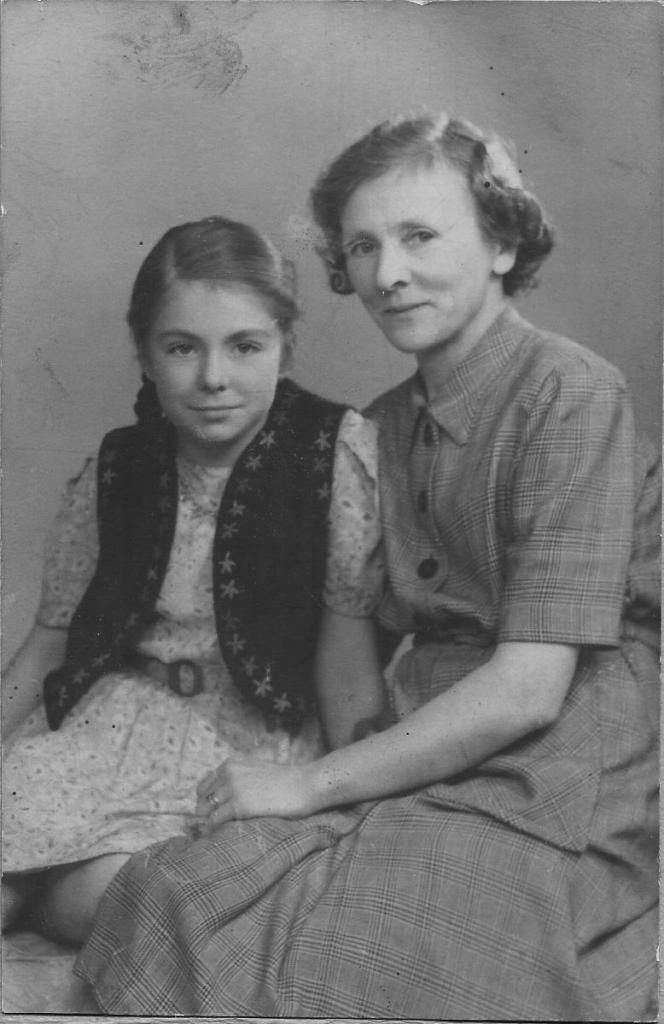
With a spare room in their house, Hilary’s mother had to take in another family who had been displaced due to bombing in London. The Messenger family, a mother and two daughters, moved in and one of the girls, Molly, was engaged to a US Army officer. The story did not have a happy ending, however, as he was later killed in battle.
VE Day followed and celebratory street parties were held all across the country. On Harcourt Road a big bonfire was lit and burned into the night. Hilary’s mother was dismayed to see that some of the furniture being burnt was better than they owned. To add insult to injury, the fire burned a five inch hole in the road, which the council had to repair.
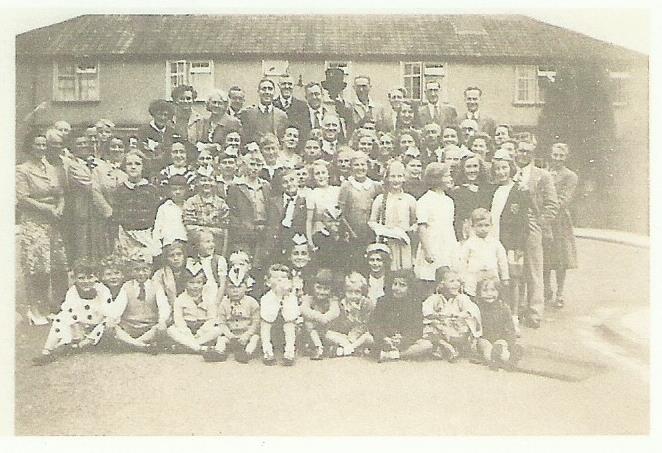
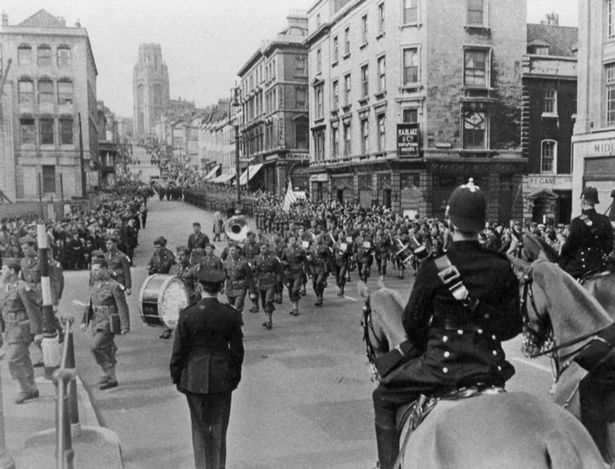
A victory parade was held by the US Army who marched through the streets of Bristol. Hilary and her mother went to watch the parade on College Green but, being quite short, she couldn’t see very well. Help was on hand: “A tall American in uniform standing beside us hoisted me onto his shoulder so that I could see better.” Unfortunately, she wasn’t quite captured on camera.
After the war, Hilary and her mother moved to London to be with her father. After studying geology at Queen Mary College she worked for the Met Office. Having lived in London and Exeter for her working life she retired to Bristol.
Sources: Interviews with Hilary Brock, May 2023
‘To Keep Open and Unenclosed’ The Management of Durdham Down since 1861 – Gerry Nichols
Clifton Down – American Vehicle Park Site – Reinstatement (Bristol Archives 42054/2)
We’d love to hear your own stories. Please get in touch with us by emailing YanksinBristol@gmail.com
Copyright © 2026 – YanksInBristol.co.uk – No AI – All rights reserved.
 US Military in WW2 Bristol