
Originally screened by BBC West in 2015, VE Day: First Days of Peace – Race Relations Now explored the experience of African Americans in Bristol in the Second World War. Bonnie Greer interviewed one veteran and the relatives of two more to tell their story and the long-term impacts on the people involved.
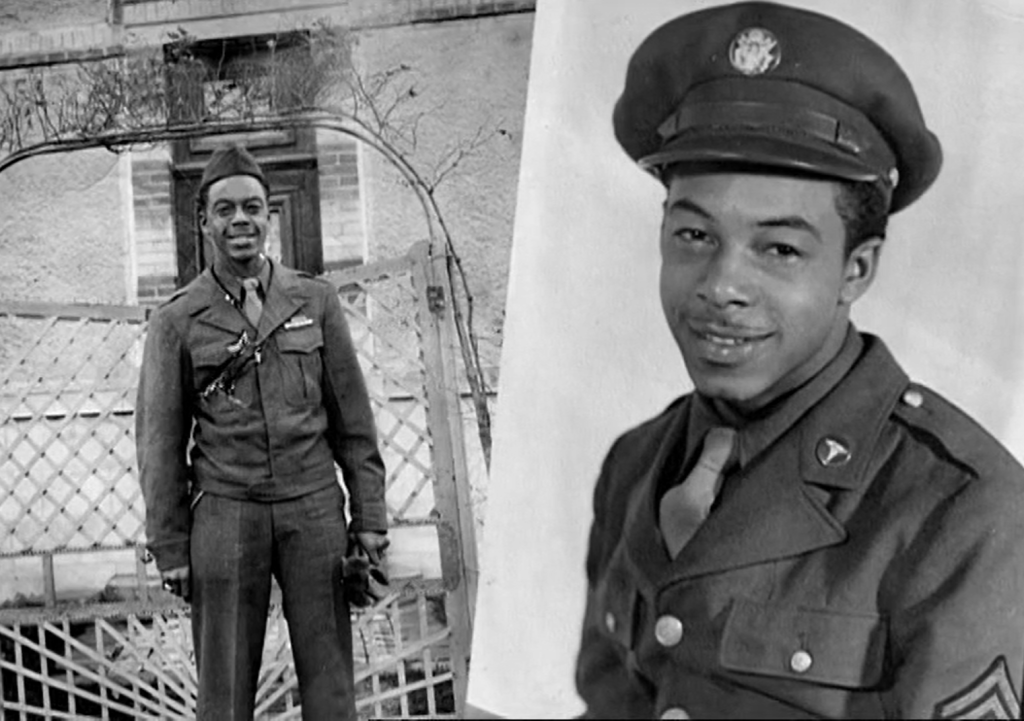
Elijah Glenn Ward
Elijah Glenn Ward arrived from Chicago as a staff sergeant in 1944.

“I knew about Westminster Abbey, London Bridge and the Palace. And Stratford-upon-Avon. I didn’t know too much, but I said, ‘I know this is history, so I must absorb it.’ And it was quite exciting for a 19-year-old away from America.”
On socialising:
“There was great joy for me. I would go to the dances every week. They loved to dance and I did too. I learned the dances, you put your left foot in, you take your left foot out. The pubs were great, every one I went into, in London and everywhere else. Drinking warm beer, that was so peculiar. I did not drink that much anyway, but you know, ice was not a commodity. I was taken care of in Britain, so greatly by the people, and it was just so markedly different from the US.
On racial prejudice:
“I was invited to the dance in the daytime by a beautiful young lady. I wasn’t on duty for anything. We got on a double-decker bus and she stepped out on the bus in front of me and the bus was crowded. I turned around and looked to see if I could make room for somebody else and this guy started to get up and said ‘If I had a gun, I would kill you both.’ The thing is that, well, I just spoofed him off and the bus drove off. The driver could see something was fermenting there. The soldier was a US soldier. That was my American supposed comrade that was so steeped in racism that he couldn’t stand to see me with this beautiful young lady.”
Louis Edmead
Staff Sergeant Louis Edmead was from the Bronx. His son explains his story:
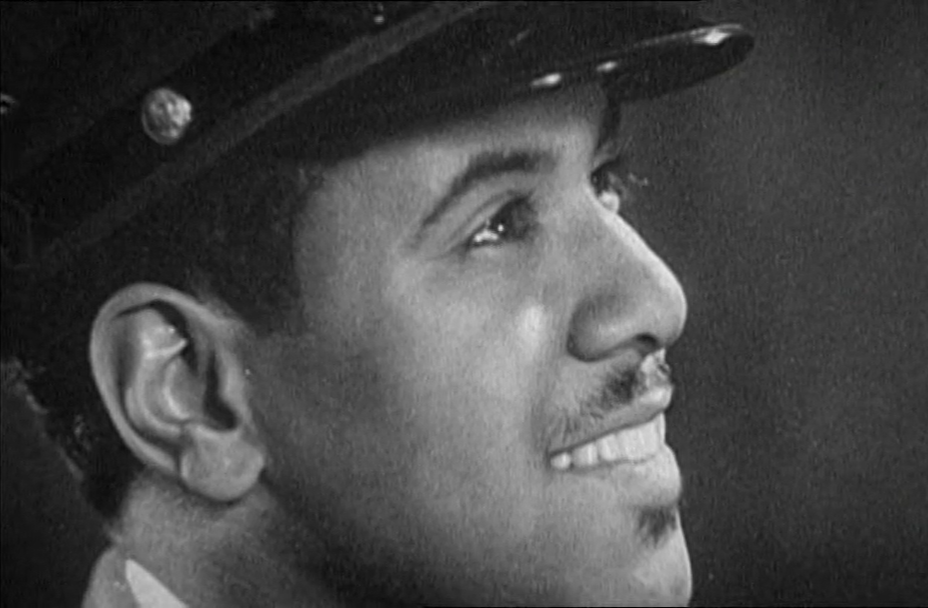
“After three years at war, the city was on its knees. The lack of food, the lack of decent clothing, the lack of heating in houses. All these things were alien to him, even though he only came from a working-class background in New York. The GIs, when they were marching, marched to a rhythm. [Bristolians] had never seen anything like it, especially the black GIs and it was just incredible, something they’d never experienced.”
On socialising
“He was a mean dancer; the music was in his veins. He experienced this modern jazz and the jitterbug so that was particularly attractive again to the local girls because they were good dancers.”
His future wife Pat takes up the story:
Well, we went to this dance, local dance, and I went with my sister, she was younger than me. And I knew this man, I had seen him there, but I wasn’t interested in him and then, I got to know him and like him. A very nice man, I was a very lucky girl.”
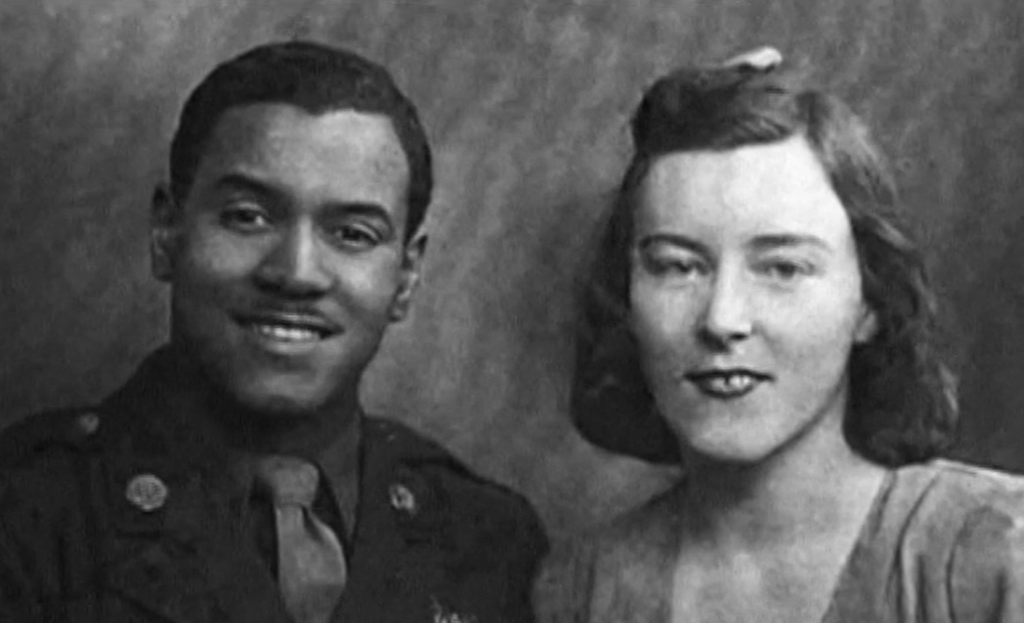
At the end of the war, Louis and Pat were separated when he had to return home.
“I couldn’t quite believe it. It was awful, a really sad time. Lots of people would say to me, they were quite nasty, really, ‘Well, you won’t see him again.’
But in the winter of 1947, 18 months after Louis had left, Pat heard a noise outside her bedroom.
“I opened the window and there was Louis and he had a bag on his back and I said, ‘Don’t go away.’
And he said, ‘I’ve come 15,000 miles, I’m not going anywhere.’
Pat and Lewis married and had many happy years together.
Pearl Conway/ Walter Haynes
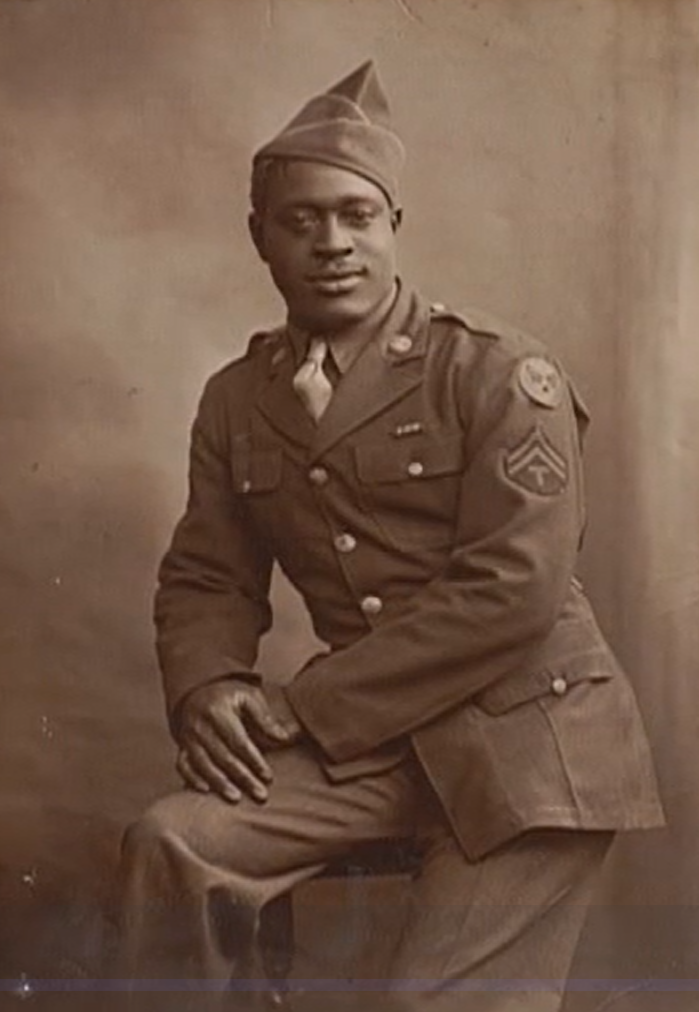
Pearl Conway was born following an affair between Priscilla Richards and Corporal Walter Haynes while he was based in Bristol. With Pearl still a baby, Walter was sent back to America after which, every effort was made to erase him from her life. Walter wasn’t even named on her birth certificate.
“My grandfather was a bit ashamed of his daughter because he let it be known that she was attacked or raped and that was the story he put out but it wasn’t that at all. He didn’t think that that should be allowed to be known and he just made up a lie.”
Walter Haynes would send maintenance money to England for his daughter but that was hidden from Priscilla. In adult life, Pearl tried to trace her father but was sadly too late. He had died years before. However, there was a happy ending when Pearl discovered a whole new step-family and that her father always carried a picture of her.
“[It was] absolutely wonderful, because to find out that he’d got my photo, even though it was a funny little photo, it’s just wonderful, just wonderful and I do feel a completeness.”
The Colston Arms
The programme also tells how a policy of segregation was brought in with separate pubs for black and white soldiers. While most pubs reluctantly accepted the policy, one prominent pub refused and became a symbol of defiance. Ironically, this was The Colston Arms on St. Michael’s Hill (since renamed The Open Arms). Historian Dr Graham Smith explains:
“The United States Army wanted black and white troops to remain separate. This pub said, ‘No, they’re just as good as one another. We’ll serve black troops and we’ll serve white troops were “they in the area.”
In a lot of pubs, when [white troops] went to a pub that was serving blacks, would boycott the pub, they wouldn’t come in there again. Whoever kept [The Colston Arms] at the time was a very brave person, because, to have black and white soldiers in here, was almost inviting trouble.”
We’d love to hear your own stories. Please get in touch with us by emailing YanksinBristol@gmail.com
Copyright © 2026 – YanksInBristol.co.uk – No AI – All rights reserved.
 US Military in WW2 Bristol