
How did the relationship between the U.S. Armed Forces and the people of Bristol develop over the course of WW2? Was it always cordial or did it sour over time? Through a series of newspaper articles from the British Newspaper Archive, we tell the story of the fluctuating friendship and respect between the hosts and their American guests.
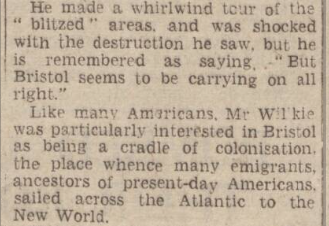
The first important visit of an American to Bristol during the war was from Wendell Willkie, The recently-defeated presidential nominee, landed at Bristol Airport in February 1941. He arrived as part of his mission to get the U.S. to give England “the utmost aid possible in her struggle for free men all over the world”. He flew onto London but on his return by train was keen to see war-torn Bristol.
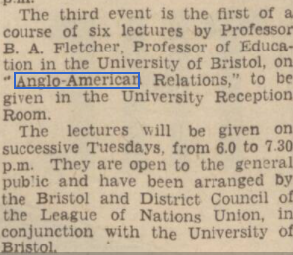
As G.I.s started to arrive in numbers, Bristol University held lectures for the public to learn about Anglo-American relations.
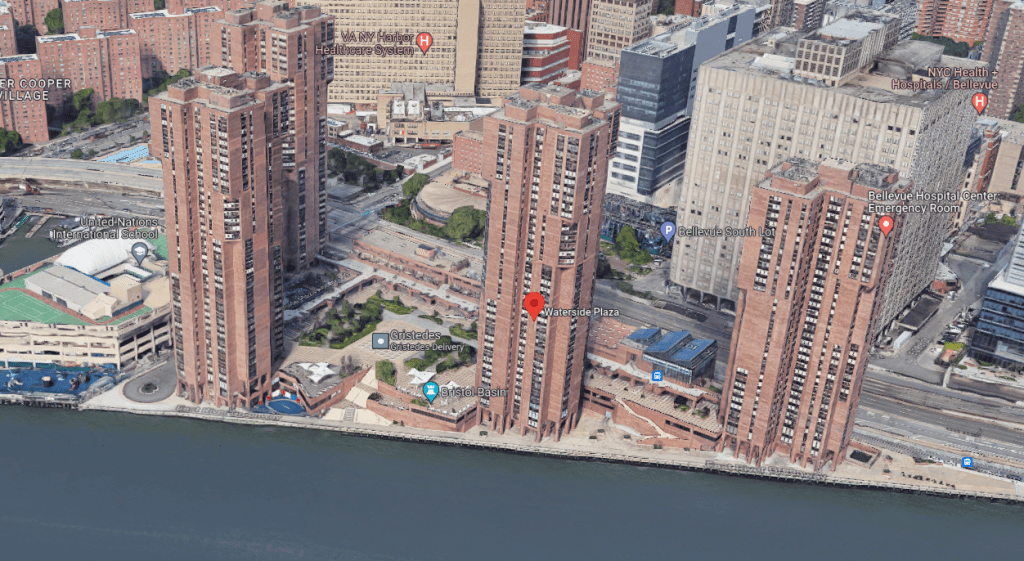
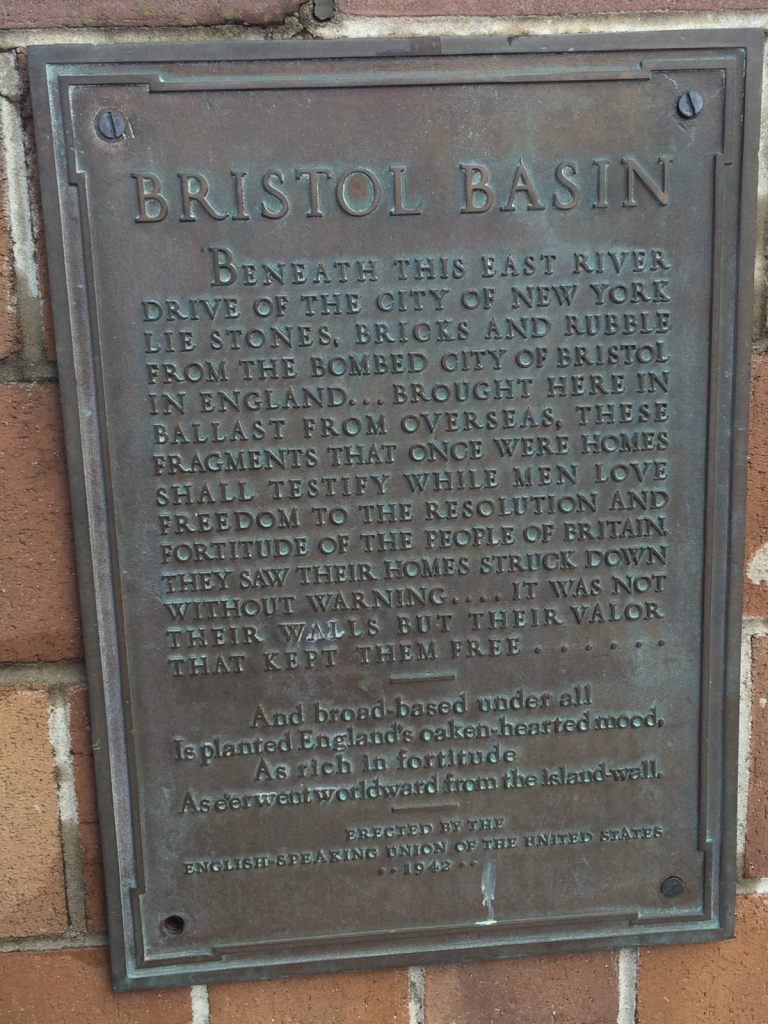
Meanwhile, ships delivering vital supplies from the U.S. were returning with rubble from Bristol’s blitzed housing as ballast. It was used to reclaim land in Manhattan and a plaque was unveiled. The area is now known as Bristol Basin.

By July 1942, U.S. Armed Forces were arriving in greater numbers and the Western Daily Press were keen to emphasize the strong bonds between Bristol and America.
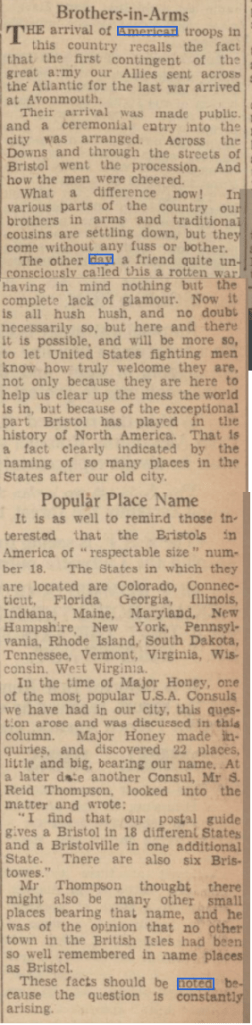
Bristolians were keen to show their appreciation that the U.S.A. had joined the war and their young men and women were in the city. From this article, it’s clear that many G.I.s appreciated their hospitality especially when invited into private homes.
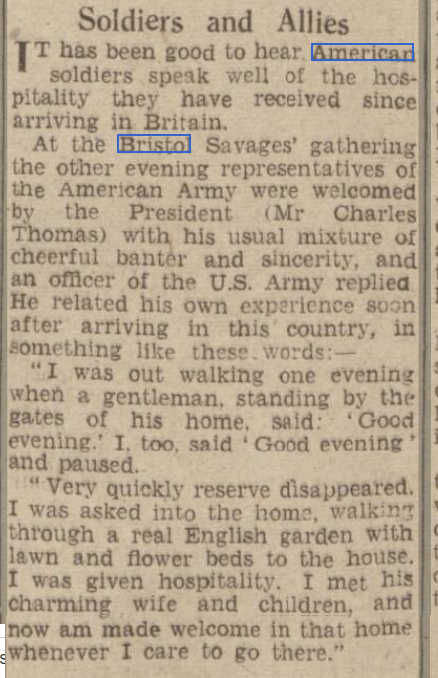
The press seemed to make a special effort in showing black GIs that they were particularly welcome in Britain (When Jim Crow Met John Bull by Graham Smith gives a comprehensive account of the conflict between British and American race relations in the Second World War). In one much-quoted example, a vicar’s wife near Weston Super Mare tried to stop her female parishioners from mixing with African-American soldiers but the locals refused to comply.
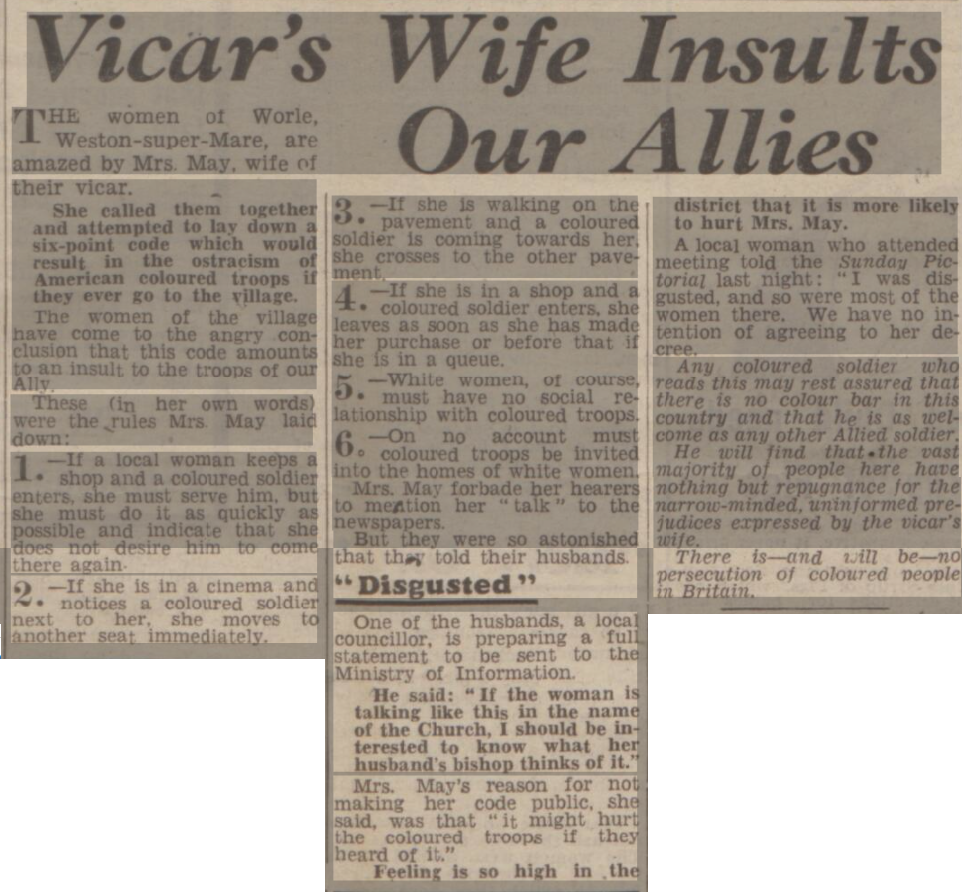
What were the first impressions of life in Bristol for the young men who had come from diverse backgrounds from all over America? For some, it was surprise at the number of chimneys in the city!
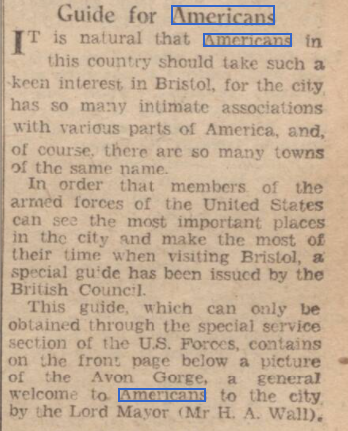
As the build-up of forces really built up towards D-Day, the British Council wanted to ensure that G.I.s could find all they needed in the city. Guides for all major cities were produced, Bristol’s can be seen here.
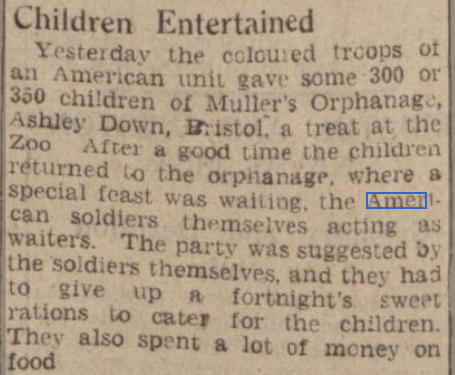
There were many cases of amazing generosity from American Servicemen to the people of Bristol, particularly children. In this case, black GIs took children of the Muller Orphanages to Bristol Zoo. The GIs in question may well have been those who stayed in one of the requisitioned Muller buildings.
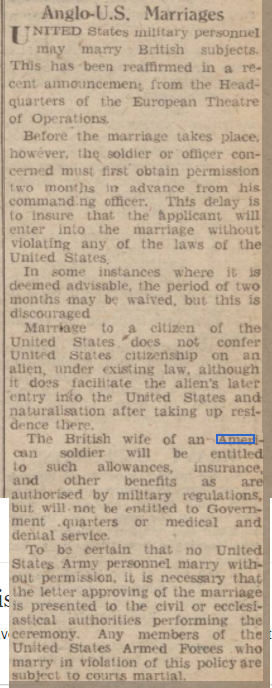
With many Bristolian men overseas, the arrival of thousands of smart, healthy and comparatively wealthy Americans inevitably led to many relationships. Some of these turned into marriage but only after the U.S. military granted permission in May 1944.
Ask a senior Bristolian what their most vivid memory of the Americans in the Second World War was and they’ll usually have the same story: sitting on a wall and asking passing GIs “Got any gum, chum?” They then report that the ‘Yanks’ were generous to a fault and would shower them with treats they hadn’t seen in years. For one correspondent to the newspapers though, these were unwelcome scenes.

Camps had sprung up all over Bristol (see locations) but NCOs and officers in particular were billeted in the spare rooms of Bristol’s private houses (here’s one account). Understandably, many households were not keen at first to house strange men but, in many cases, close friendships were made. Of course, there was no reporting of animosity in the papers and it was only referred to after many Americans had left for D-Day as this moving piece demonstrates:
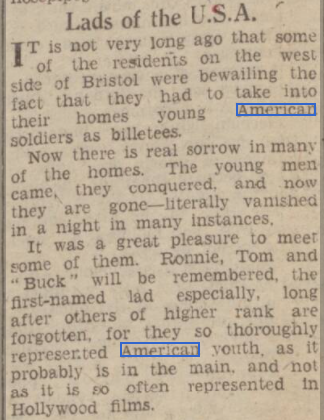
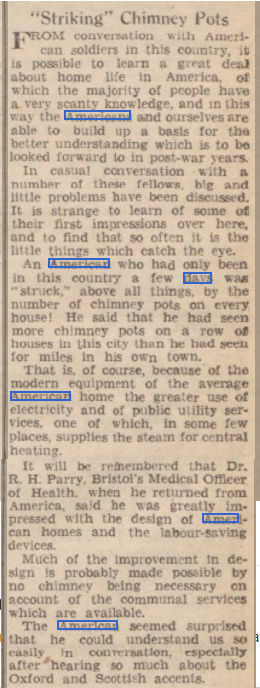
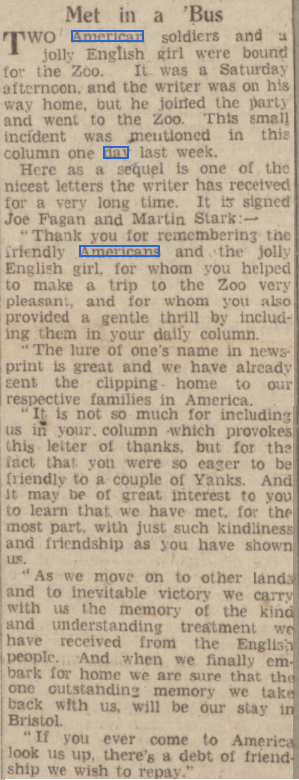
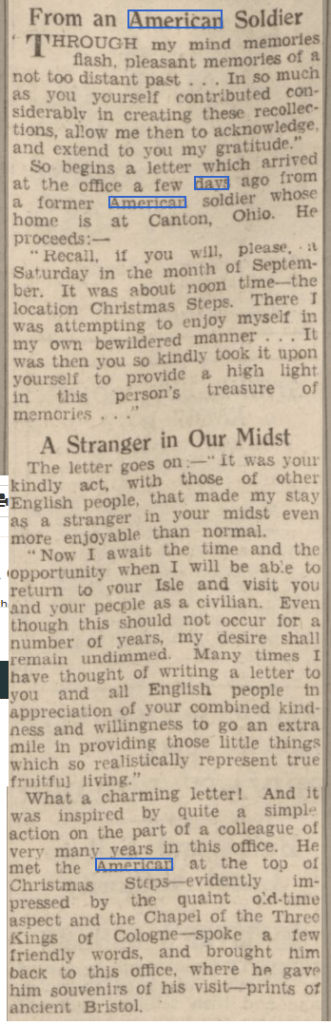
The appreciation of Bristolian hospitality continued from the American personnel after D-Day and a real affection had grown for their hosts as this rather innocuous but charming story demonstrates:
Wartime reporting restrictions meant that the units stationed in Bristol couldn’t be named as this could provide vital intelligence to the Germans. General Bradley‘s First Army had been stationed in Bristol prior to D-Day after which they were replaced by Ninth Army. After they had left, both were able to admit their presence and pay thanks to the people of Bristol.
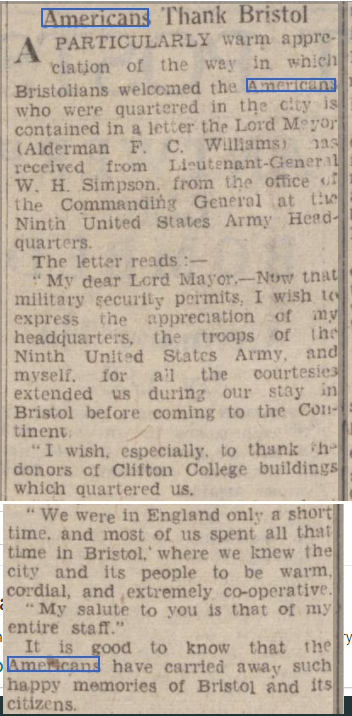
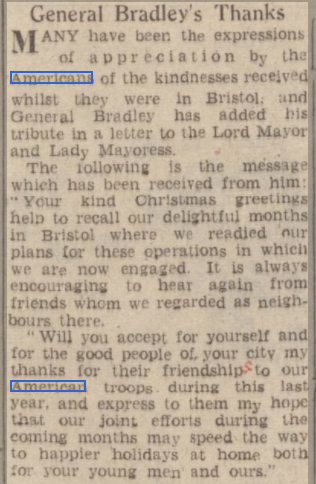
Western Daily Press, 13th October 1944 (l) and 17th January 1945 (r)
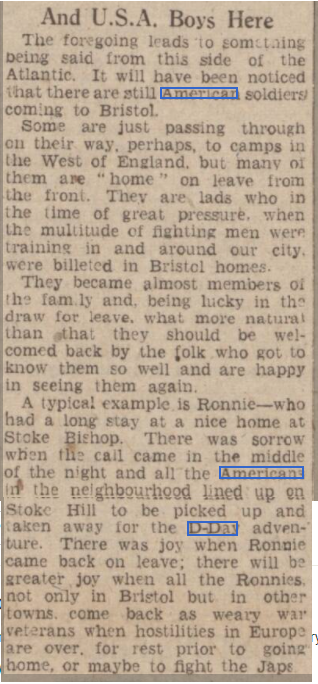
Even before the end of the war, the strength of the bonds between some GIs and their Bristolian hosts could be seen. By April 1945, most Americans had left but others were returning on leave keen to see their ‘family’ with whom they had formed a special bond.
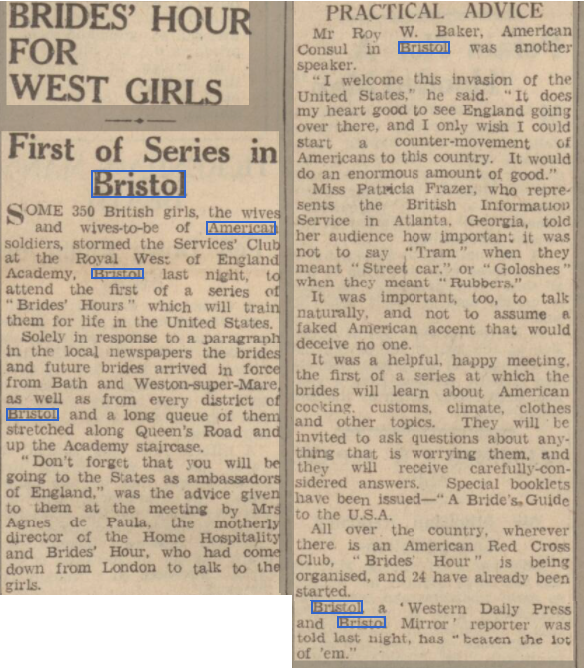
As the war in Europe came to an end, many Bristolian war brides followed their new spouse across the Pond. But how would they adapt to life in America? Help was at hand in the Royal West of England Academy as ‘Bride Training’ was held for 350 women from the West.
Of course, with many marriages came many babies and an unusual competition was held to find the ‘finest’ baby as a result of an American father and a Bristolian bride.
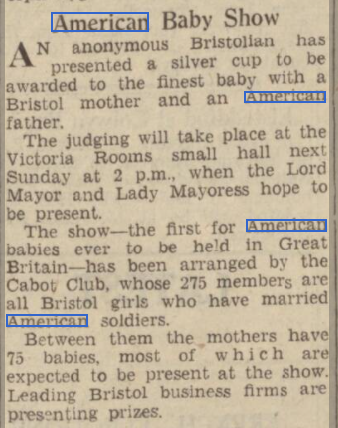
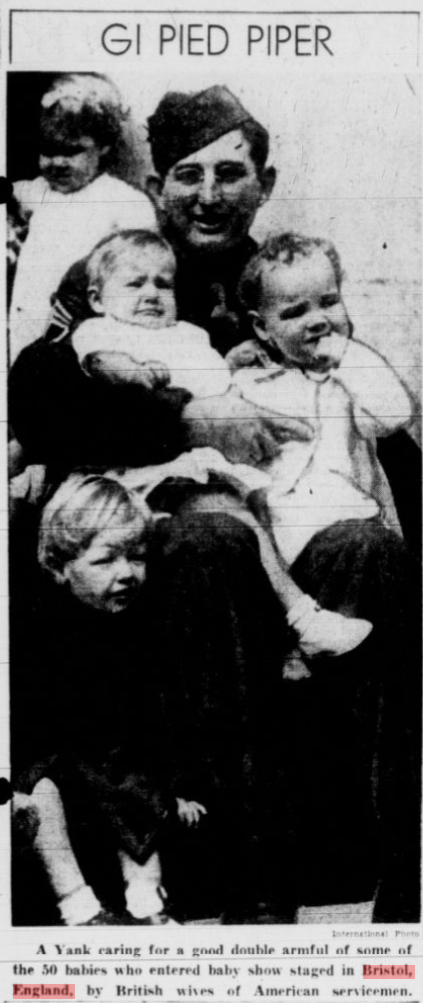
Western Daily Press, 31st July 1945 (l) / Detroit Times, 11th Oct 1945 (r)
For those G.I.s returning home to America, forever changed by their experience of war, many still recalled with fondness their stay in Bristol and would return in later years.
All British press articles were found on the British Newspaper Archive. The Detroit Times article came via the US Library of Congress.
We’d love to hear your own stories. Please get in touch with us by emailing YanksinBristol@gmail.com
Copyright © 2025 – YanksInBristol.co.uk – All rights reserved.
 US Military in WW2 Bristol